Pages

7searchgrid

coinads_728x90

coinads468x60

7search728x90

zerads728x90

multiwall_728x90

bmfads_728x90

ads-bitcoin_728x90

mondiad_728x90

zerads_300x250

adbits_728x90

advertica_728x90

trafficadbar_728x90

7searchtext

Search This Blog

hilltop_vast3

Autoplay VAST 3.0 Ad

Monday, August 5, 2024

The best AI productivity tools

 These are the best AI productivity tools to help you use artificial intelligence in your daily work.

As the dust settles on last year's AI storm, ChatGPT is just one of hundreds of powerful tools in the game. From new intelligent features on apps you already love, to entirely new platforms with jaw-dropping functionality, there's an AI-powered solution to nearly every productivity problem.

I've been playing around with AI tools for a while now, and I've continued to update this list with lots of research and testing from me and the team at Zapier. With that, here are 37 AI productivity tools that will change the way you work.

The best AI productivity tools by category

Zapier Chatbots lets you create custom AI chatbots and take action with built-in automation—no coding required. Try the to-do list bot template, so you can start breaking down goals into actionable tasks.

How I selected the best AI productivity app in each category

My AI app database is at 270 entries right now. I'm absolutely sure there are way more out there, with many new apps being launched every week.

Full transparency: I've had a chance to take a look at most of them, but I haven't tested them all (yet). The list you're about to see contains a collection of great AI productivity tools tested by Zapier's app review team, myself included. If there's a particular category you like, check out the best apps lists we've put together for them—or if we're still in the process of writing that list, run a quick Google search to find more options.

While all these apps are getting better every day, they're far from perfect: be sure to always check AI's work with your human brain. With that being said, please keep all hands and legs inside the vehicle—it's time to explore.

1. AI chatbots

The best place to start is the category that brought AI to the mainstream. AI chatbots allow you to chat with an AI large language model, letting you ask questions and get answers in a conversational style. The best chatbots use advanced reasoning and logic, write code, and make mathematical calculations.

ChatGPT
ChatGPT, an AI chatbot

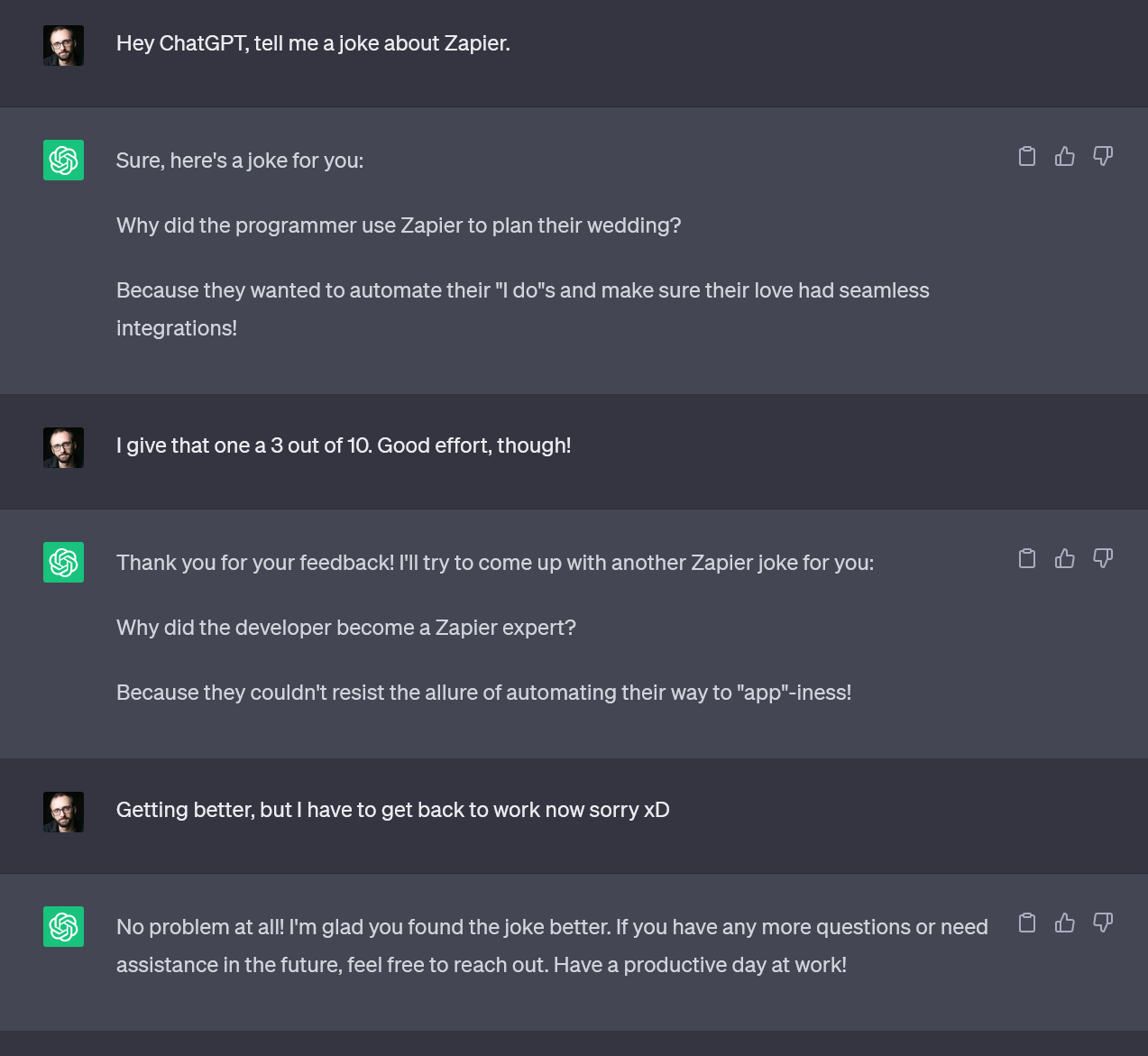
ChatGPT is the current industry leader, and the first chatbot that set the scene on fire. It's powered by OpenAI's GPT-3 and GPT-4 models, and it's surprisingly flexible and very easy to use. Learn how to use ChatGPT, understand how it works, and discover how to use it to write marketing copydo market research, or write sales emails.

Claude

Claude, the best AI chatbot for creating chatbots with Artifacts

Anthropic's safe and creative chatbotClaude has impressive memory: it can remember up to 150,000 words in each conversation. This makes it useful to have long, step-by-step discussions of a problem or to upload a PDF and ask questions.

Bing AI (Microsoft Copilot)
Bing AI, one of the best AI productivity apps

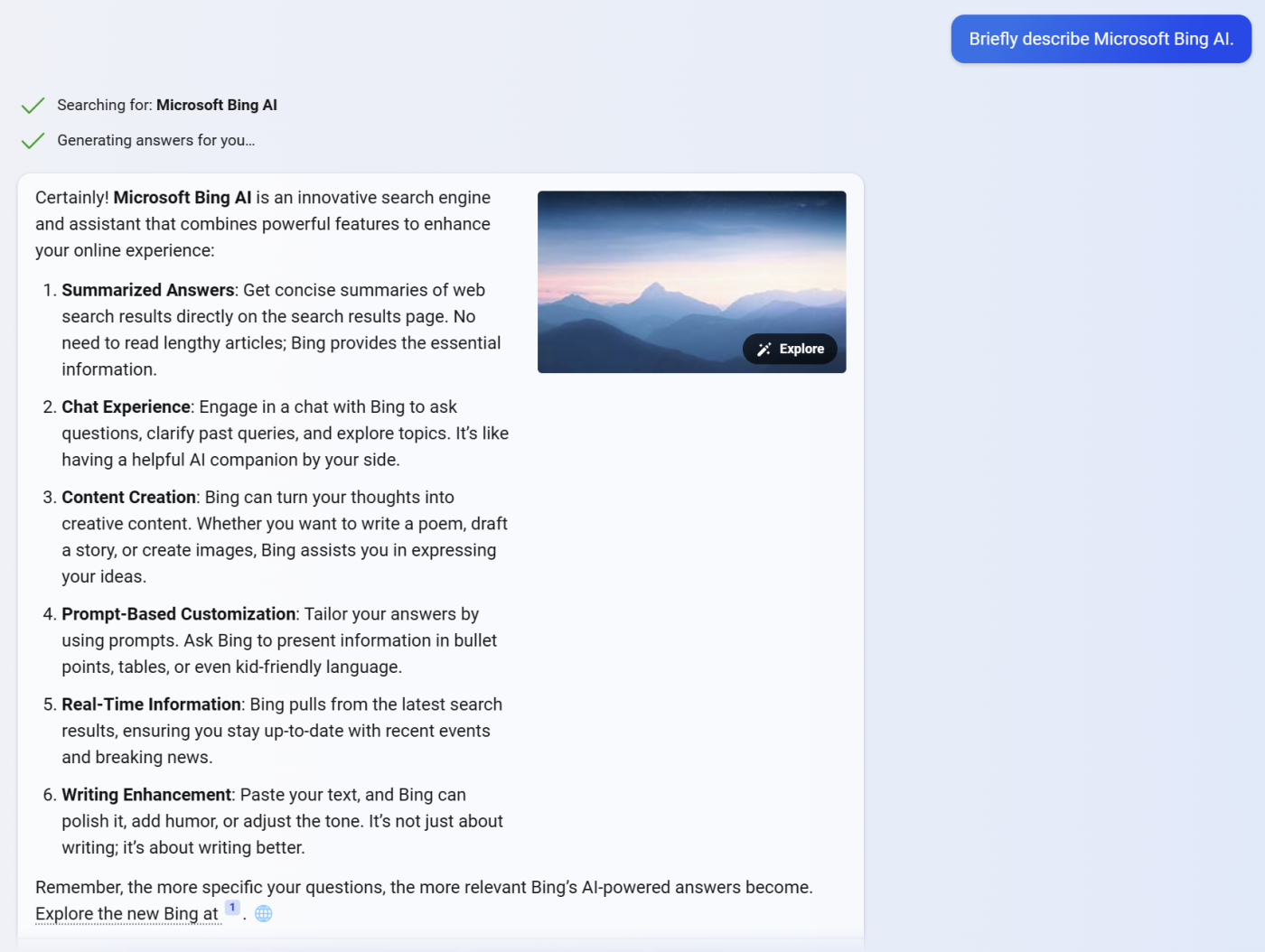
Microsoft's close relationship with OpenAI was a positive step to Bing Search: it can search the web and generate answers based on the results. It's also connected to DALL·E 3, so if you ask for images, you'll get four visual variations of your prompt. Microsoft is bringing all its AI features into a single name—Microsoft Copilot—so look out for that rebranding across its product line.

Zapier Central
Zapier Central, an AI chatbot built for automation

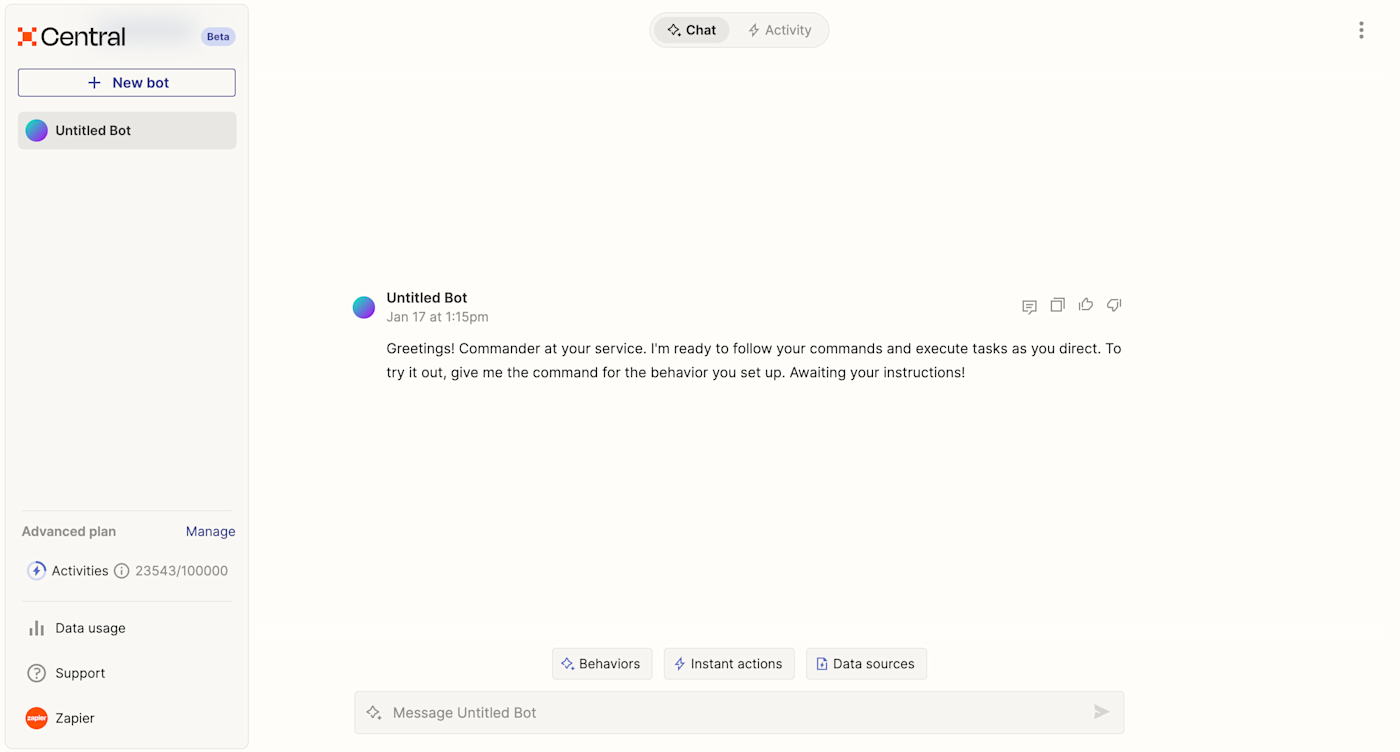
Zapier Central is an experimental AI workspace where you can teach AI assistants to work across thousands of apps. But the interface is a chatbot, which means that creating your own AI assistant is as simple as using ChatGPT.

Tell your assistant what to do when it's triggered, how to process or summarize data, and which actions it should take. You can trigger behaviors on demand, when new data comes through any app in your tech stack, or when you use a specific keyword in a message to the bot.

2. AI apps for content creation

Entire movies have been made about writer's block. These apps are here to break it. By entering your prompts, starting from templates, or using recipes, you can use AI models as a co-writer, helping you put together first drafts faster.

Jasper
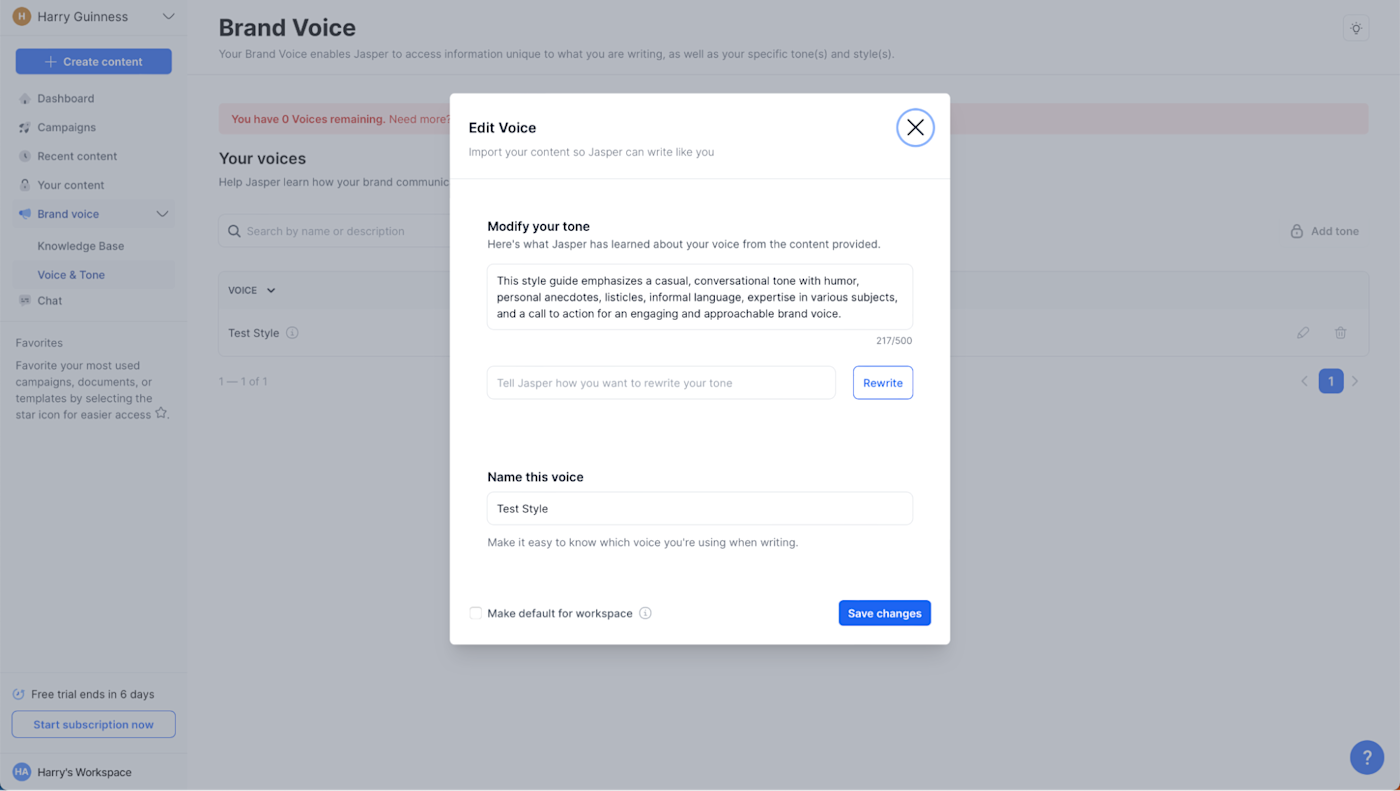
Jasper, our pick for the best AI writing generator for businesses

Jasper is a powerful AI content creation platform, favoring users who need a high volume of content. It packs dozens of templates to help you get started, connects to the internet to find research and sources, and also lets you generate images with AI. All your content creation needs are covered here.

Copy.ai
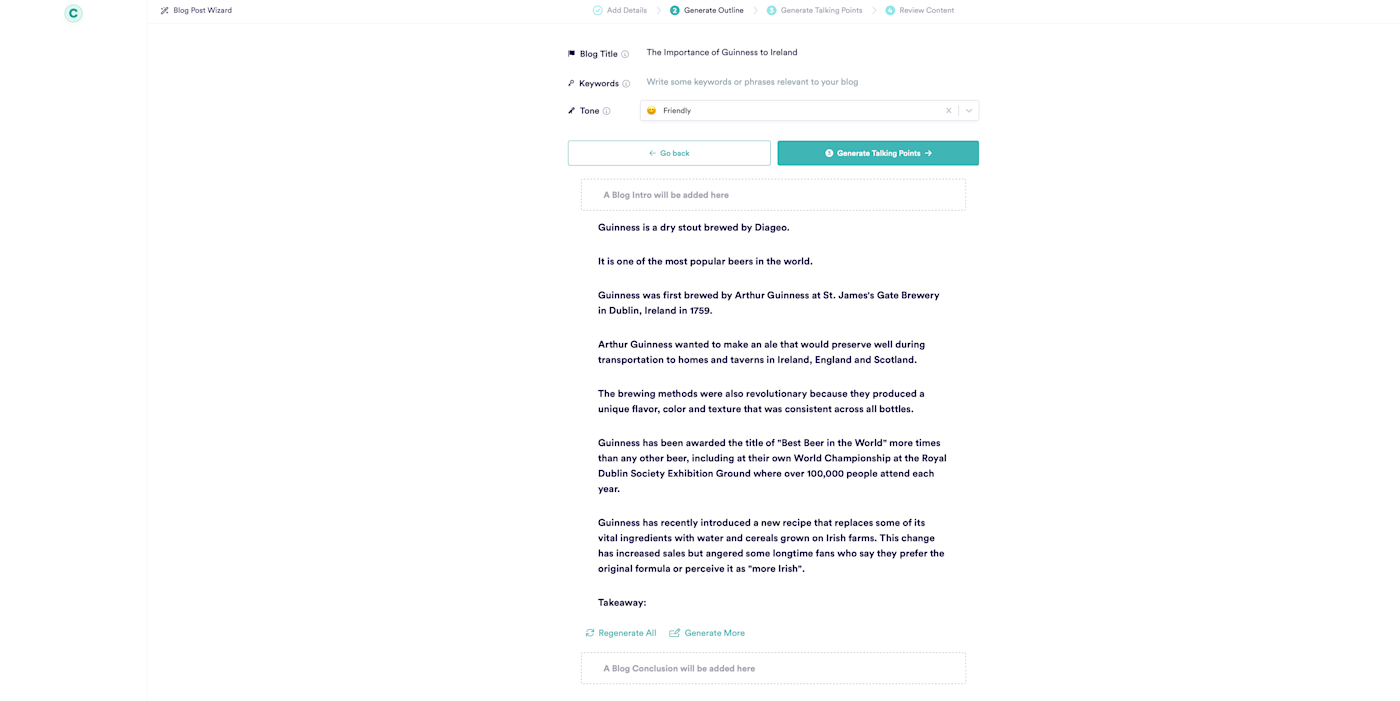
Copy.ai, our pick for the best AI copywriting tool

Copy.ai is a slower-paced option, acting as a writing co-pilot. Each of your prompts generates a list of options, and it's up to you to pull the best ones into your document. This is better for writing tasks that require more ideation and iteration, such as copywriting.

Anyword
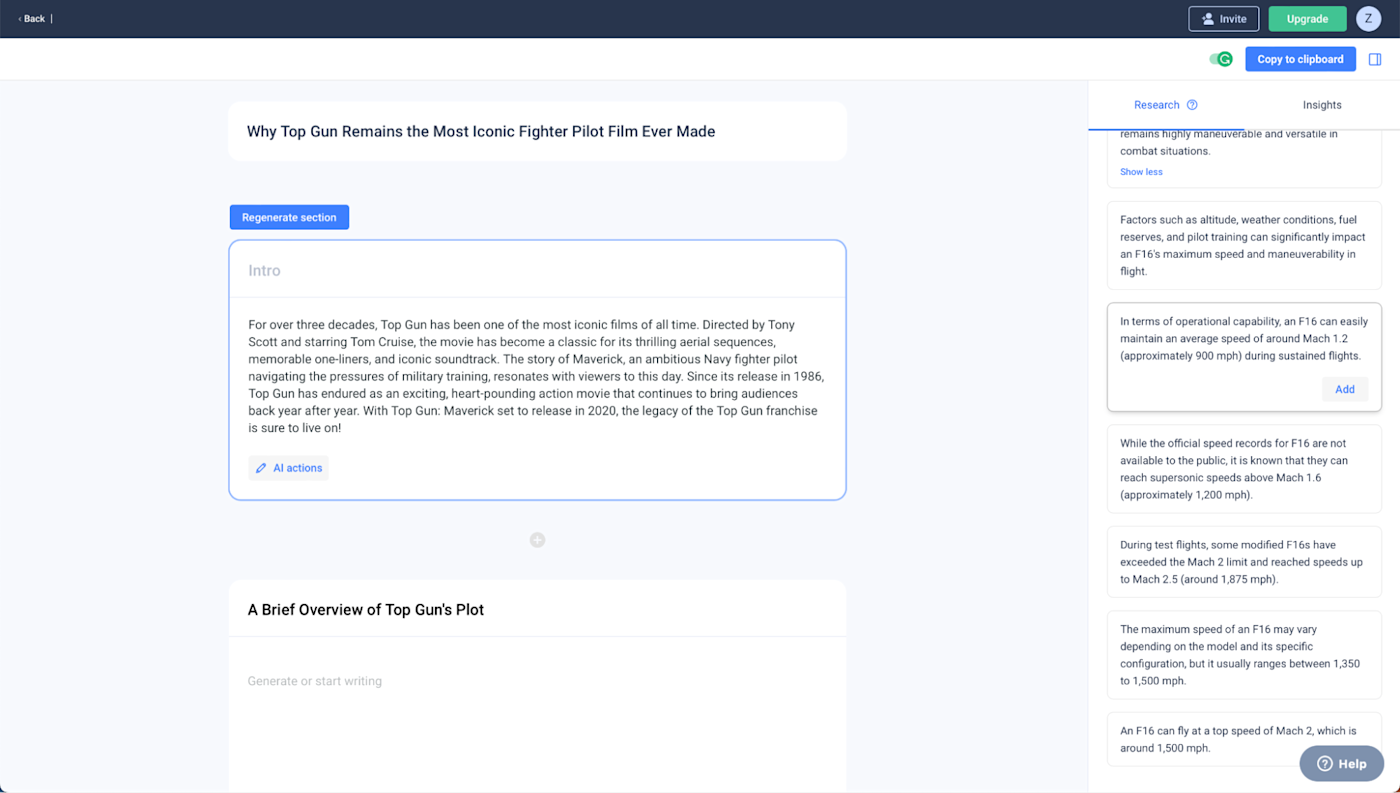
Anyword, our pick for the best AI writing assistant

Anyword helps marketers create content by breaking the generation process down step by step. First, you add your prompt to generate a few titles. Then, you can pick your favorite and see a generated outline. Once you tweak that outline to what you want to cover, you can move forward to generating the final piece.

3. AI apps for text enhancement

Spell-checking has been around for a long time, but AI is changing the game. Before, it only detected spelling and basic structure errors. Now, it can spot tone and complex language and offer suggestions to make your writing clearer.

Grammarly
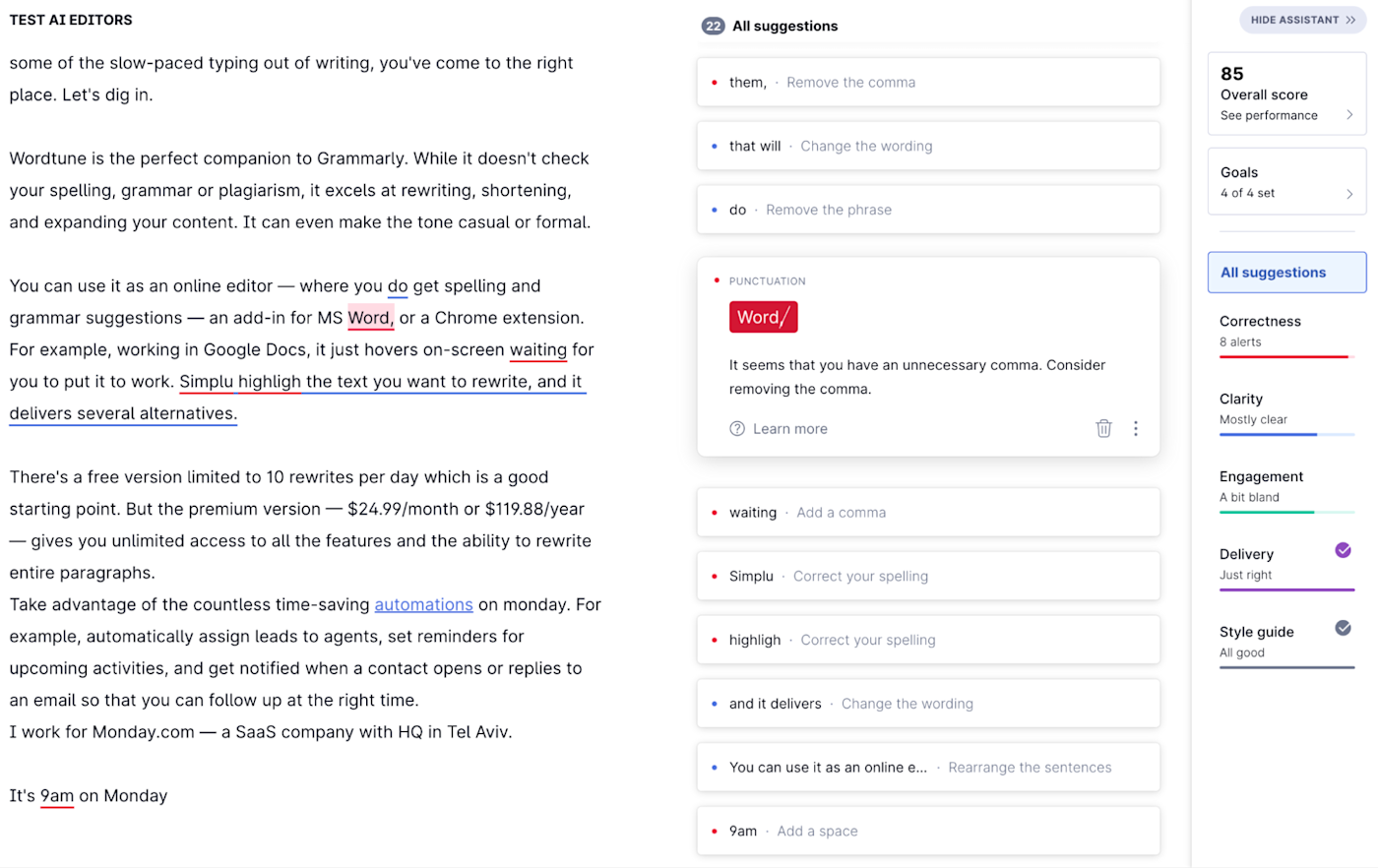
Grammarly, our pick for the best grammar checker overall

Grammarly is the mainstream spell- and structure-checking app. It's a complete solution that keeps your English on point, lets you adjust your tone, and suggests shortcuts to simplify wordy or complex phrases. It has plenty of extensions and integrations, so you can use it almost anywhere there's a text box.

Wordtune
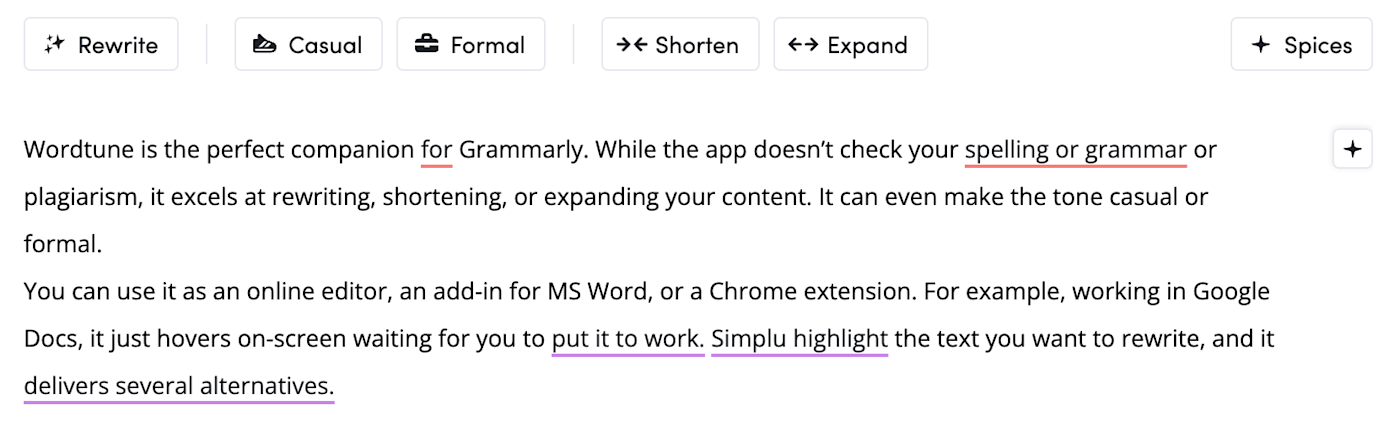
Wordtune, our pick for the best grammar checker for rewriting, shortening, or expanding content

Wordtune helps you find plenty of wording alternatives to improve your text. When you input the text you want to check, you can easily browse synonyms, ask to rewrite entire sentences, and adapt the suggestions into a final draft.

ProWritingAid
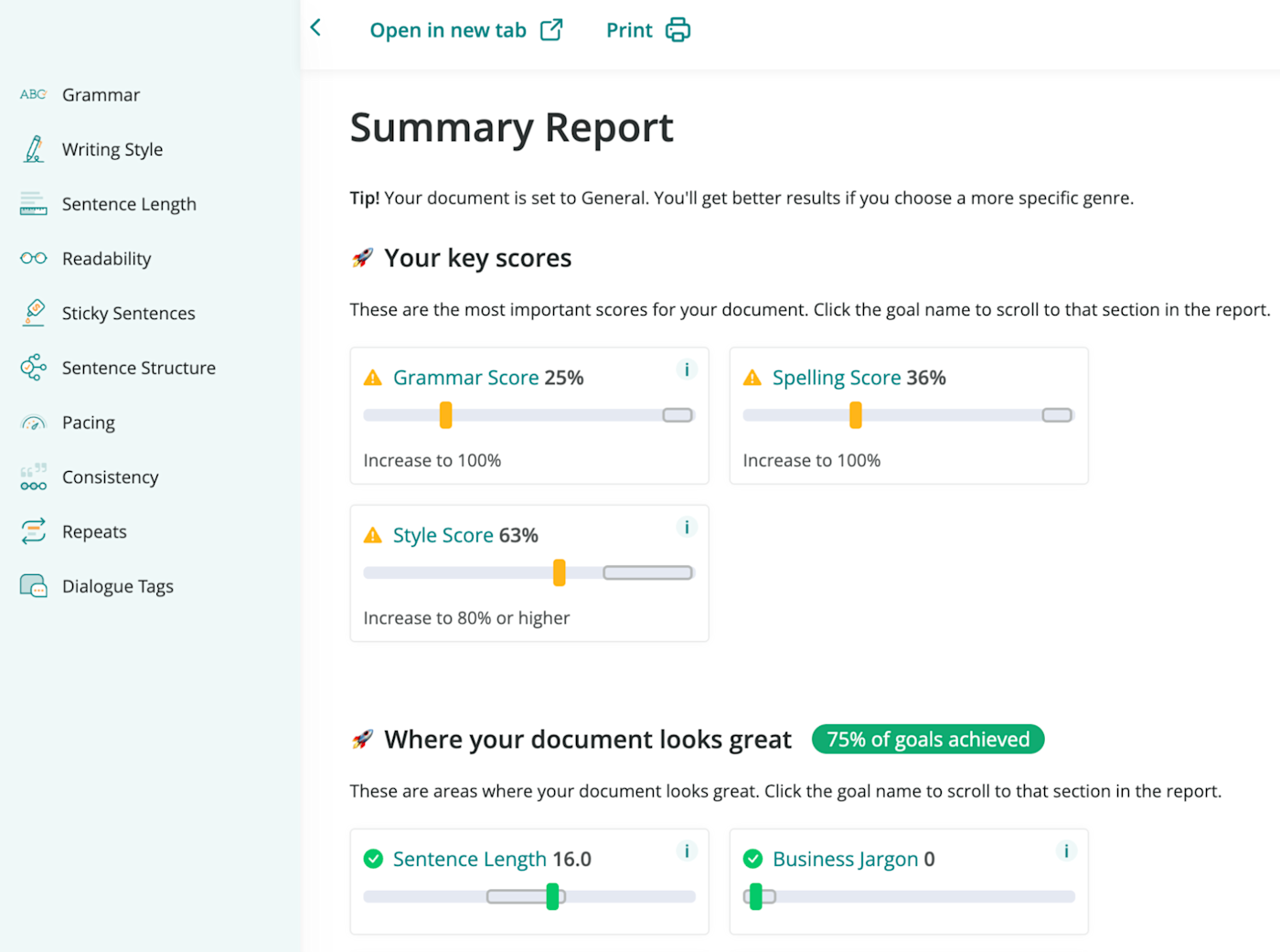
ProWritingAid, our pick for the best grammar checker for evaluation reports

ProWritingAid is a direct competitor of Grammarly, offering plenty of statistics to help you track grammar, style, and spelling scores. One of the main advantages here is its lifetime plan, helping you leverage all these features without adding a new recurring bill. Find out which is the best for you in our ProWritingAid vs. Grammarly comparison.

4. AI apps for video generation and editing

While full-blown video generation is still coming together, there's already a set of video tools that leverage AI to enhance video, remove backgrounds accurately, and even paint a few new images into each frame.

Descript

Descript, our pick for the best transcription service for audio and video editing

Descript transcribes your videos into a script. Then, instead of using a timeline to trim the audio and video tracks, you edit the text script. As you do so, the video gets trimmed automatically. The rest of the editing works in a similar way, cutting the time to edit your talking head videos. Find out how it simplifies your audiovisual workflows in our walkthrough.

Wondershare Filmora
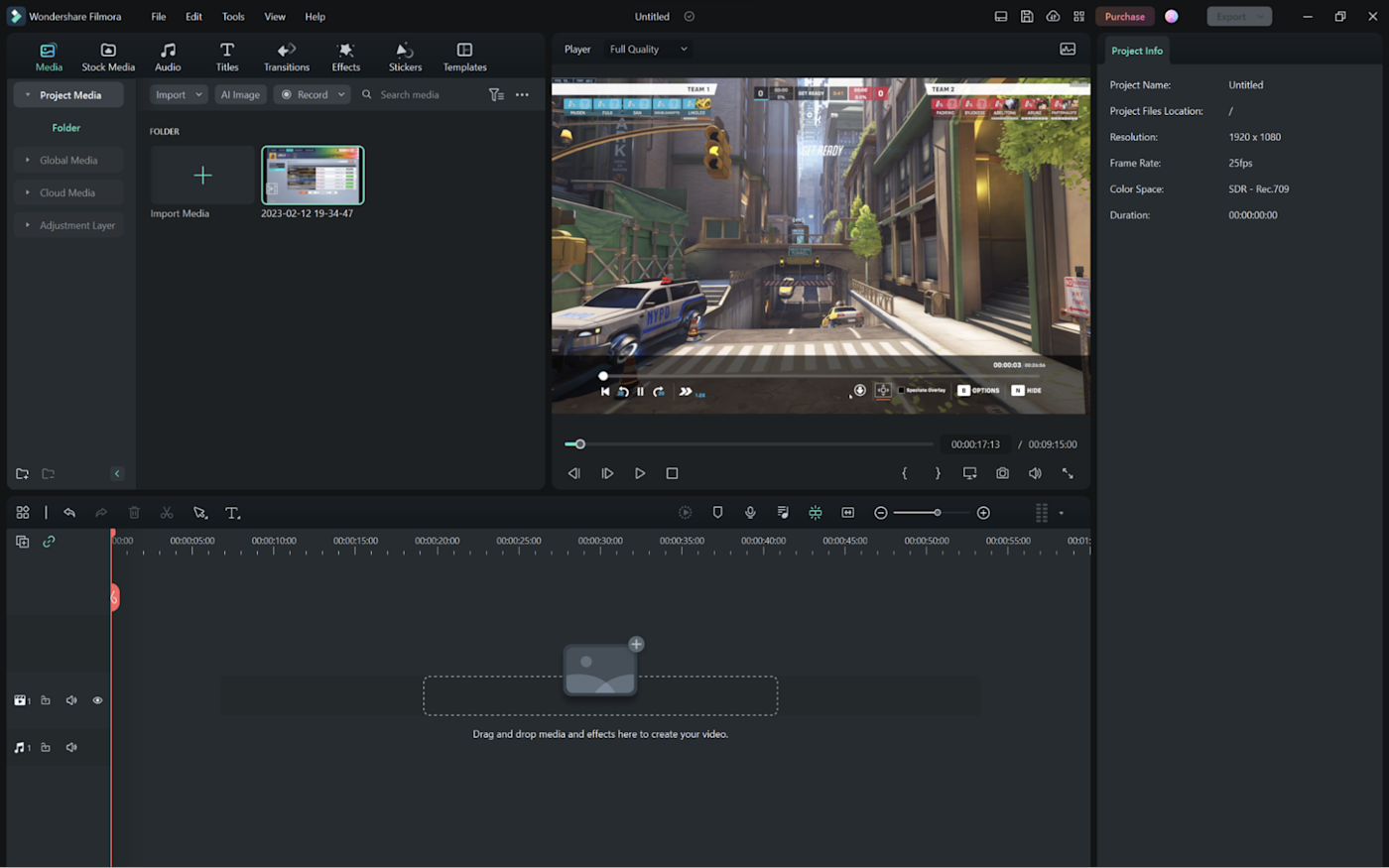
Wondershare Filmora, our pick for the best AI video editor for polishing your video with AI tools

Wondershare Filmora has been around for a long time. Now, it also brings to the table a set of AI features that let you remove backgrounds, denoise low-quality clips, and improve sound quality. All this with the classic video editing user experience, so you'll never feel lost.

Runway
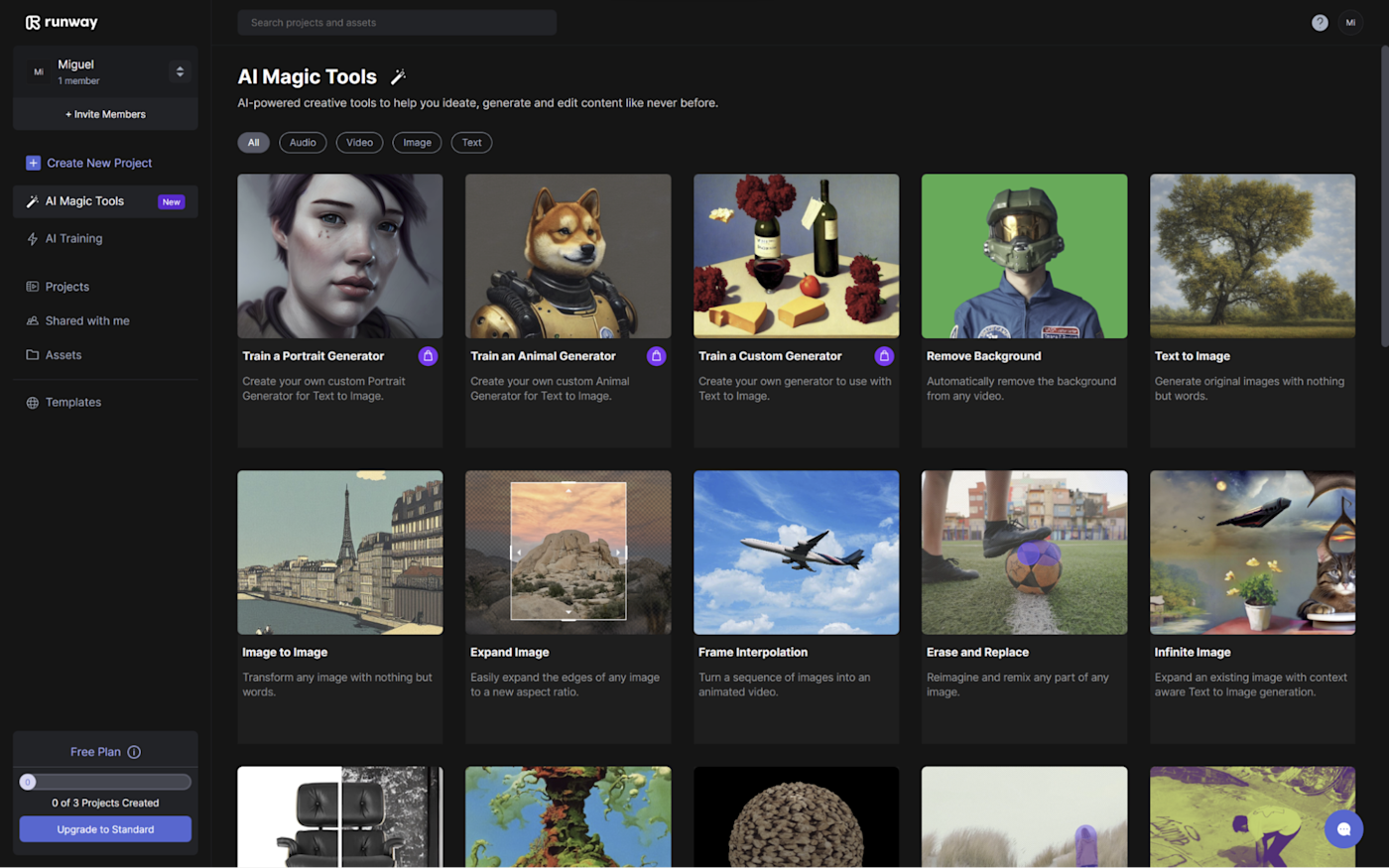
Runway, our pick for the best AI video enhancer for experimenting with generative AI

Runway is a video magic wand. It has a set of interesting features that helps you generate video with AI, train your own AI models, and paint parts of frames using text prompts. The learning curve is very rewarding, and the app is growing at a great pace. Be sure to check it out.

5. AI apps for image generation

An image is worth a thousand words, but you don't need so many to generate a beautiful one with AI. These image generators take a text prompt and deliver the results—and this can be anywhere between mind-blowing to nightmare-inducing. They're both hugely entertaining and highly useful.

DALL·E 3

DALL-E 2 rendering of "A painting by Vermeer of an Irish wolfhound enjoying a pint in a traditional pub"
DALL·E 3

DALL·E 3 is an image generator by OpenAI, the creators of ChatGPT. It's very simple to use—it runs in ChatGPT—and it produces interesting results, no matter if you've just started writing image prompts or are already a master. A great choice to begin exploring the realm of AI image generation.

You can connect DALL·E to Zapier to do things like automatically create images from transcripts, chat messages, or any other apps you use. Here are some examples.

Midjourney

Midjourney, our pick for the AI image generator with the best results

Midjourney is impressive. Anything you throw at it generates incredible results—even if sometimes they're slightly off the mark. The fact that you have to use Discord to access it feels unintuitive at first, but once you get the hang of it, you'll be spending hours turning your imagination into colorful pixels.

Hit the ground running with our guide for how to use Midjourney, or take a look at how it compares to DALL·E 3.

Stable Diffusion

DreamStudio by Stable Diffusion, our pick for the best AI image generator for customization and control

DreamStudio, powered by the Stable Diffusion AI model, is versatile and offers plenty of controls to help you prompt your way to the results you want. You'll have to invest a bit more time and learn how to control the model, but the reward is well worth it.

Here's how to use Stable Diffusion with DreamStudio, or take a look at how it compares to Midjourney or DALL·E 3.

6. Voice and music generators

YouTubers and other social media creators sometimes struggle to get original assets for their content. Good thing AI is here to (re)mix everything with AI voice generators and AI music generators.

Murf

Murf, one of the best AI productivity apps for voiceovers

Short on voiceover talent? Murf offers over 120 voices in 20 languages to turn your text into voice. With simple controls to change pitch, emphasis, and pauses, you'll have a quick way to add narration to your latest social media post or training video.

Splash Pro

Splash Pro, one of the best AI productivity apps for music generation

Moving on to music generation, Splash Pro is one of the few apps that accepts a text prompt. I recommend you try out the Improve button before sending it—you'll get more interesting results. The engine generates up to five music samples per prompt. If you like one of them, you can either ask for variations or move on to creating the fulll song.

AIVA

AIVA, one of the best AI productivity apps for music generation

AIVA also deals with music, but takes a different approach. Instead of a text prompt, there are three ways you can start generating:

Once ready, you can edit the result in a timeline editor, adding or removing instrument tracks as you feel your way into the final version.

6. AI apps for knowledge management and grounding

AI is also a powerful search tool. When you connect it to your personal data, workspace, or second brain, it can find anything you need and put it into a natural language answer. Much better than sifting through your notes for hours, right? This is the gist of grounding: keeping an AI model close to your facts—not up there flying with the hallucinations.

Mem
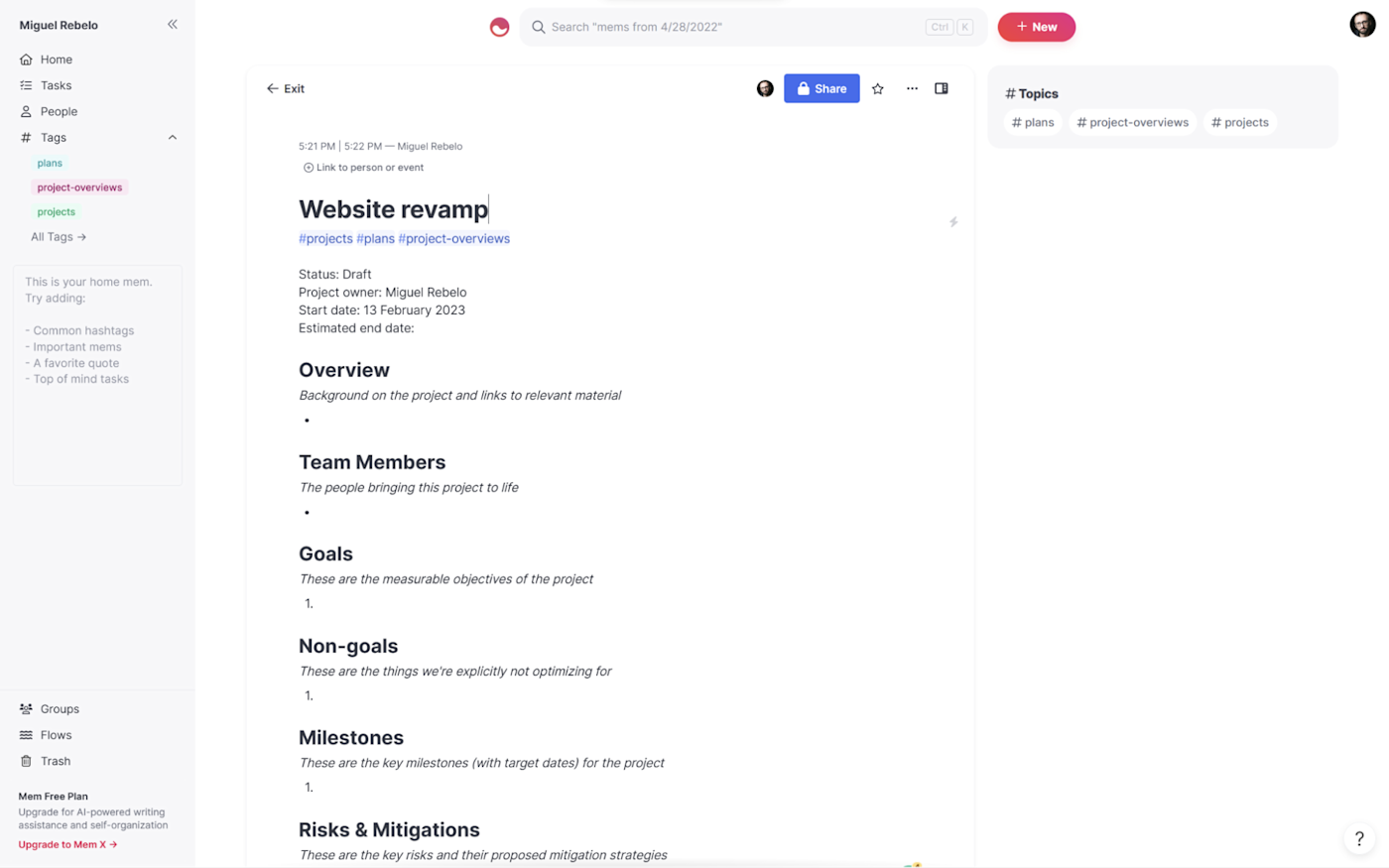
Mem, an AI productivity app for organizing notes and tasks

Mem uses AI to tag and connect the notes you take, so you don't have to spend time organizing them. You can just gather bits and pieces of information, store them, and trust that Mem's AI features will keep everything connected and organized. When the time comes to search for those notes, you can browse the automatic tags and use the search bar to find all you wrote about each topic that matters to you.

Notion AI Q&A

Notion is a strong workspace for organizing your knowledge, but even if you're disciplined, important pages will still fall through the cracks. Not anymore with Notion AI Q&A: grounded on your data, it generates answers and points you to the sources, revealing that lost insight you recorded in a meeting years ago.

Personal AI

While Mem and Notion focus on notes and documents, Personal AI focuses on messaging. The data you upload into the app is turned into memory blocks. Then, whenever someone messages you, your personal AI generates a reply based on your data: you can edit the details or tap to send it right away. When you feel your AI model knows enough about you, you can turn on AI Autopilot, which will make others feel like they're talking to a ChatGPT-like version of you. 

8. AI task and project management

When you have a good plan, collaboration and execution is easier. AI can help getting more clarity on what to do, optimize processes, and help you cross every single task off your list.

Asana

Asana, one of the best AI productivity tools for project management

A project management heavyweight, Asana adds a wide range of useful AI-powered features. Smart goals use historical data to come up with better goals for the quarter. It identifies project risks and workflow blockers, so you can tackle trouble before it happens. And it provides answers to anything related to your projects, helping you gain more visibility into what is (or isn't) happening.

Any.do

Any.do, one of the best AI productivity apps for task management

It's natural not to know the entire task lineup of a project. If you have trouble figuring out all the steps to get from zero to complete, Any.do generates tasks for you. Whenever you're writing them down, you can take a look at AI suggestions and click to enlarge your list.

BeeDone

Beedone, one of the best AI productivity apps for task management

BeeDone is a quirky option directed at those of us who need a little excitement to get things done (I'm 100% guilty here). Based on principles put forward by Cal Newport and James Clear (among other productivity greats), the app turns boring tasks into little games, offering rewards whenever you move forward. It keeps track of your habits, offers an AI assistant to guide you, and you can spin the Task Roulette if you feel like tackling a random one from your list.

9. AI transcription apps and meeting assistants

Taking notes in meetings may reduce your focus, so why not scrap that activity entirely? AI transcription/meeting assistant apps are great to turn voice into text, letting you browse it later. This will help you be more present in your meetings and, at the same time, be able to thoroughly analyze the transcription later.

Fireflies
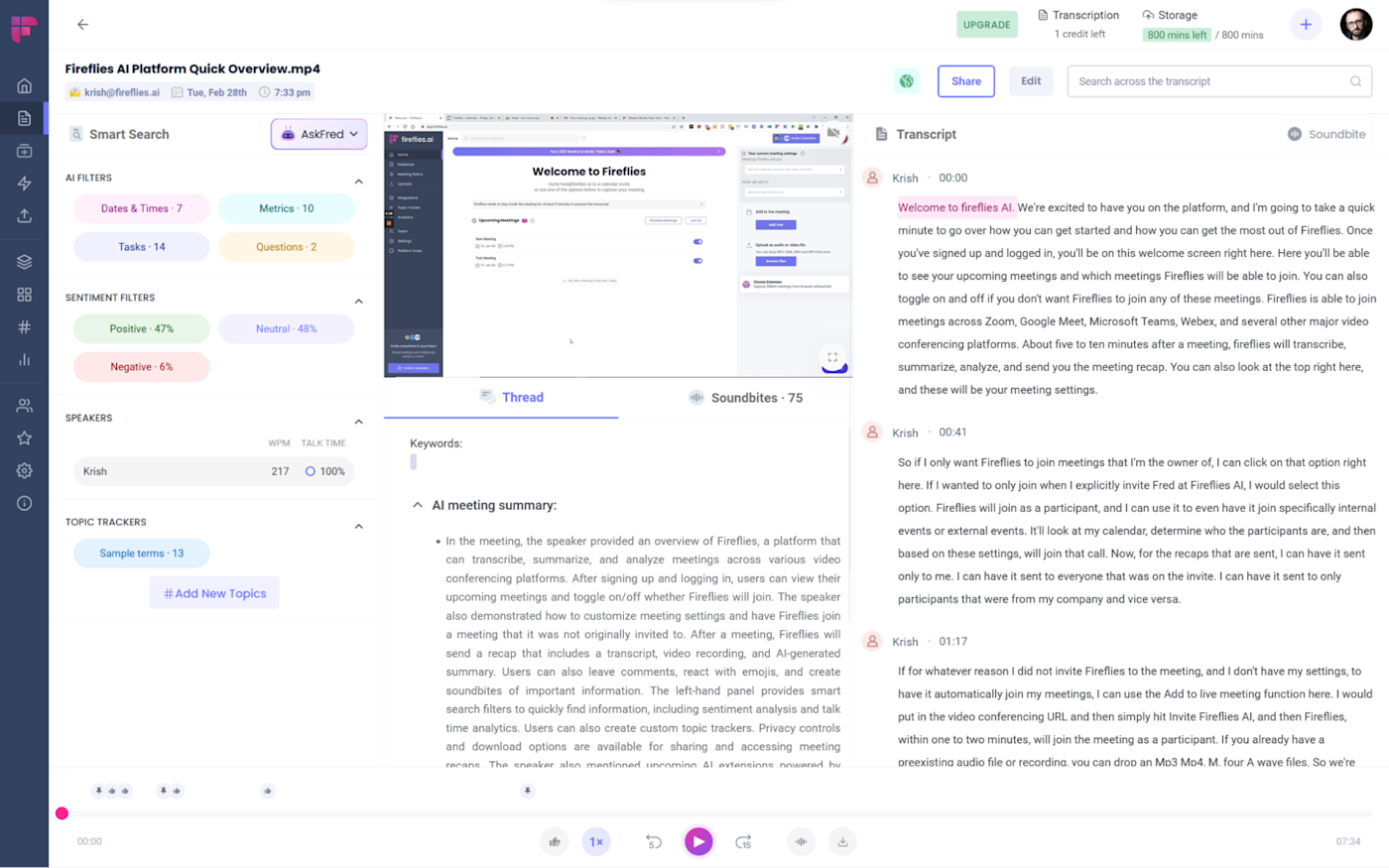
Fireflies, our pick for the best AI meeting assistant for collaboration and topic tracking

Fireflies is great to transcribe all your meetings, tracking the conversation topics along the way. It has its own bot called Fred that can handle summarizing the meeting's contents, generating text, and searching through your history to meet your query.

Airgram
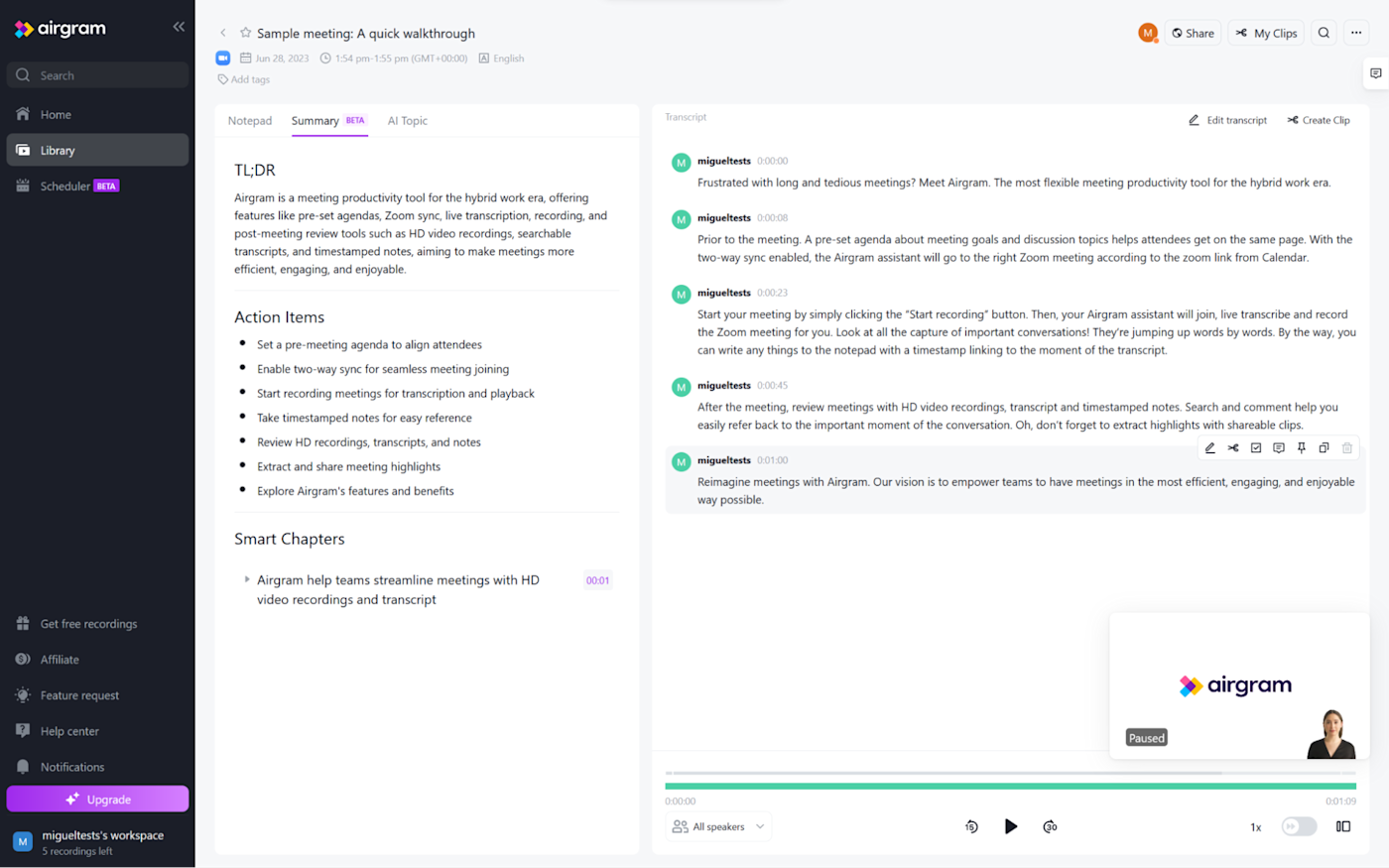
Airgram, our pick for the best AI meeting assistant for AI data extraction

Airgram has all the core transcription features too. But it also adds AI data extraction on top of it, helping you extract bits of information, such as currencies, people, or places from unstructured data.

You can integrate Airgram with Zapier to automatically upload meeting notes to the cloud and automate your other meeting workflows. Here are a couple examples of how to get started.

Krisp

Krisp, our pick for the best AI meeting assistant for high-quality meeting audio

Krisp is actually an audio optimization tool that reduces background noise to help you sound better in meetings. While you can use it to improve your podcast or other important recordings, you can also use it to assist you in your meetings by transcribing everything.

10. AI apps for scheduling

No one loves the back and forth of setting up meetings, or any of the extra work tied to scheduling your work for the day. In an ideal world, you'd just look at your calendar, hop on meetings, and start your tasks at the marked date and time. We're getting closer to that, as AI can already take some trouble out of scheduling your work and your life.

Reclaim

Reclaim, our pick for the best AI scheduler for protecting your habits

Reclaim does a great job protecting your habits, so you never miss your weekly fitness objectives or your reading targets. More than that, it'll defend the time you need to complete important tasks by rearranging your schedule.

Clockwise
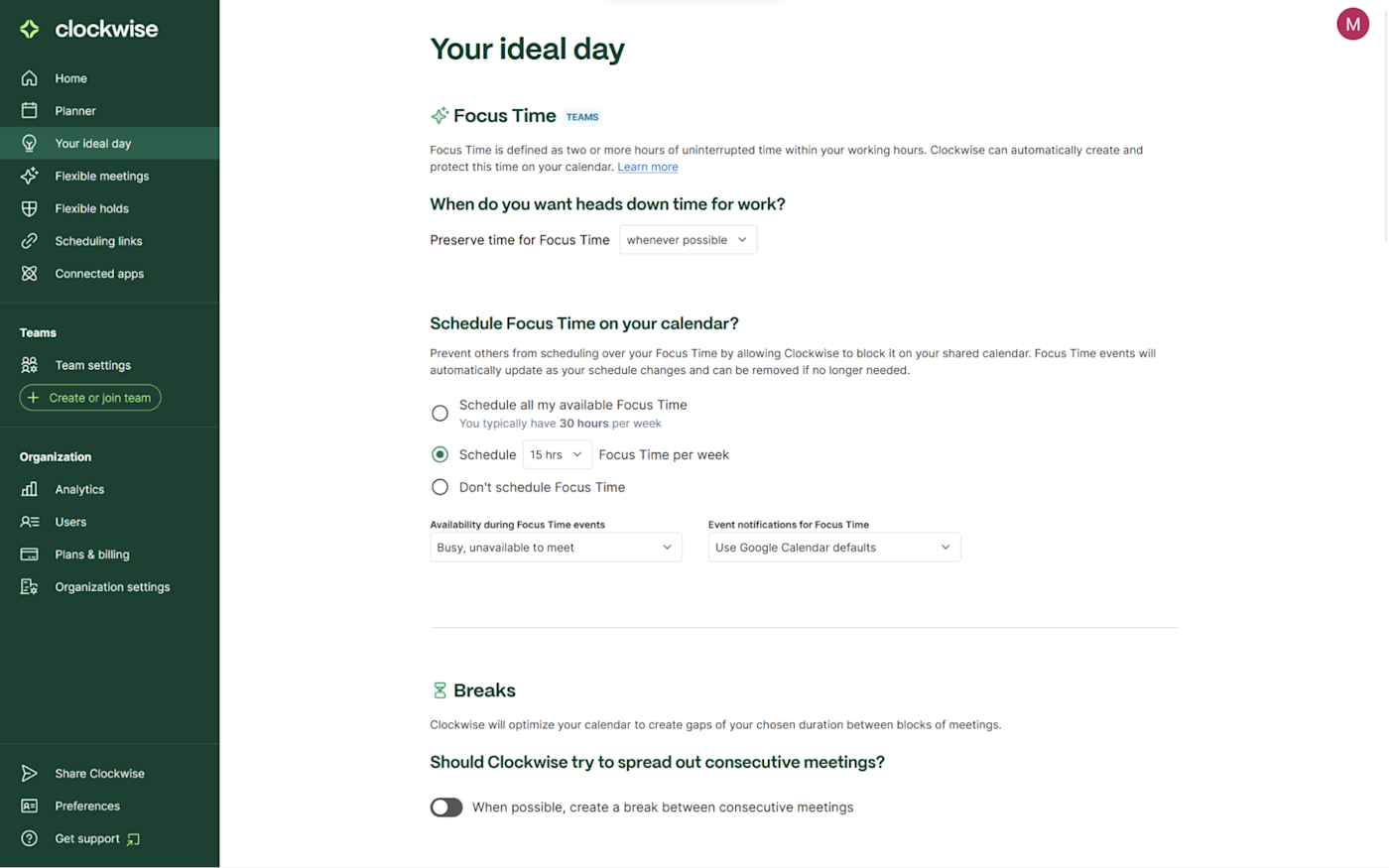
Clockwise, our pick for the best scheduling AI tool for syncing team calendars

Clockwise is better for teams, promising to save you one hour per week—and to show you that it works, it'll schedule a one-hour break shortly after you start using it. You can adjust the settings to create your ideal day where work, breaks, and meetings live in harmony.

Motion
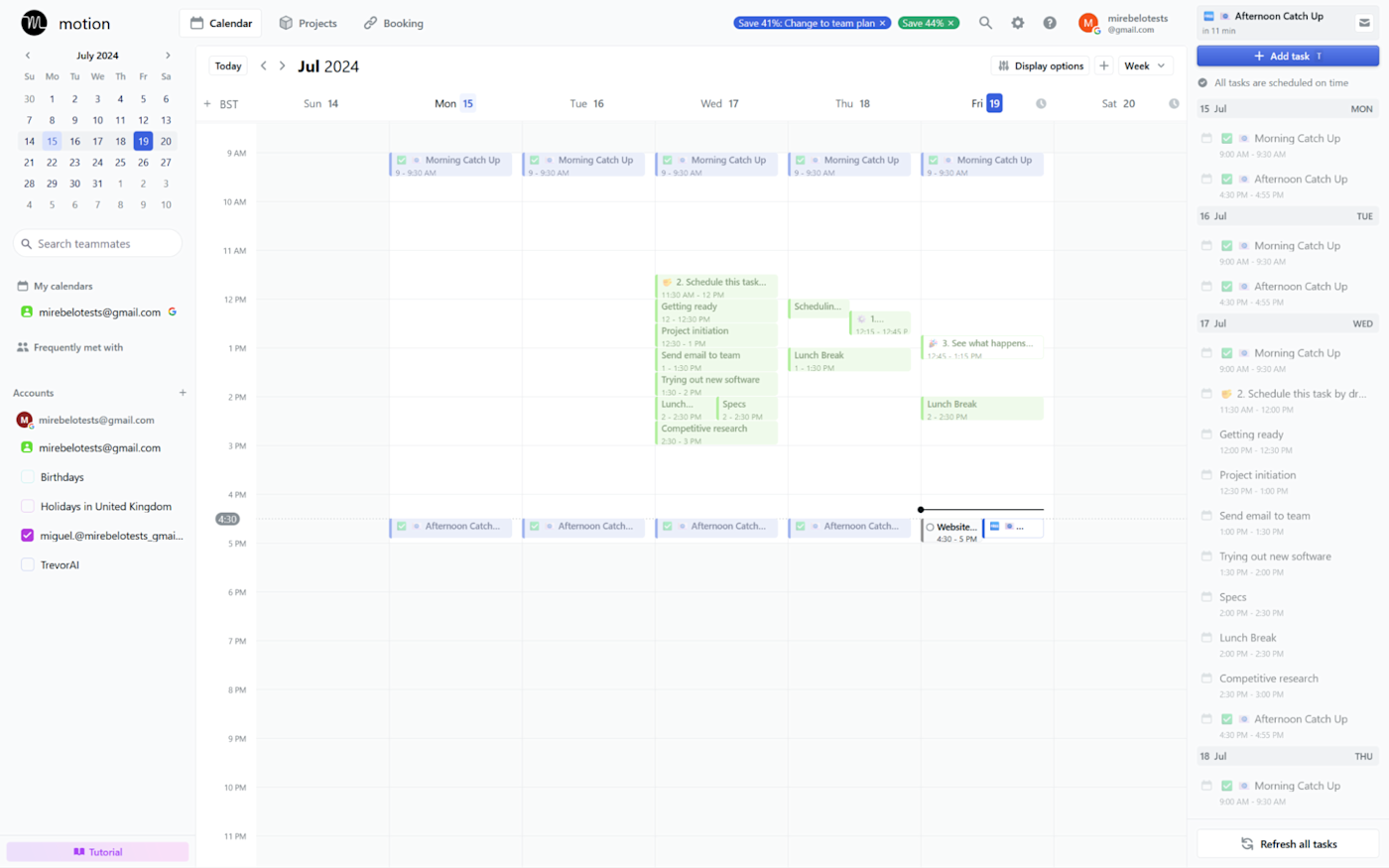
Motion, our pick for the best AI schedule assistant for project management

Motion focuses on project management, helping you keep track of all the tasks you still have to complete. By tweaking each task priority, you'll be telling the AI engine when it should land on the calendar and how to place the other tasks around it.

By connecting Motion to Zapier, you can automatically create new Motion tasks from Slack messages, emails, and any other tool you use at work. Here are a few examples to get you started.

11. AI apps for email and inbox management

People spend about one month per year managing their work email inbox—no, I didn't make this up. With so many messages to follow up on, it can feel like email is driving you away from what really moves your work forward. You can start cutting the admin time here by using an AI email assistant to categorize, generate reply drafts, and keep everything up to date.

SaneBox
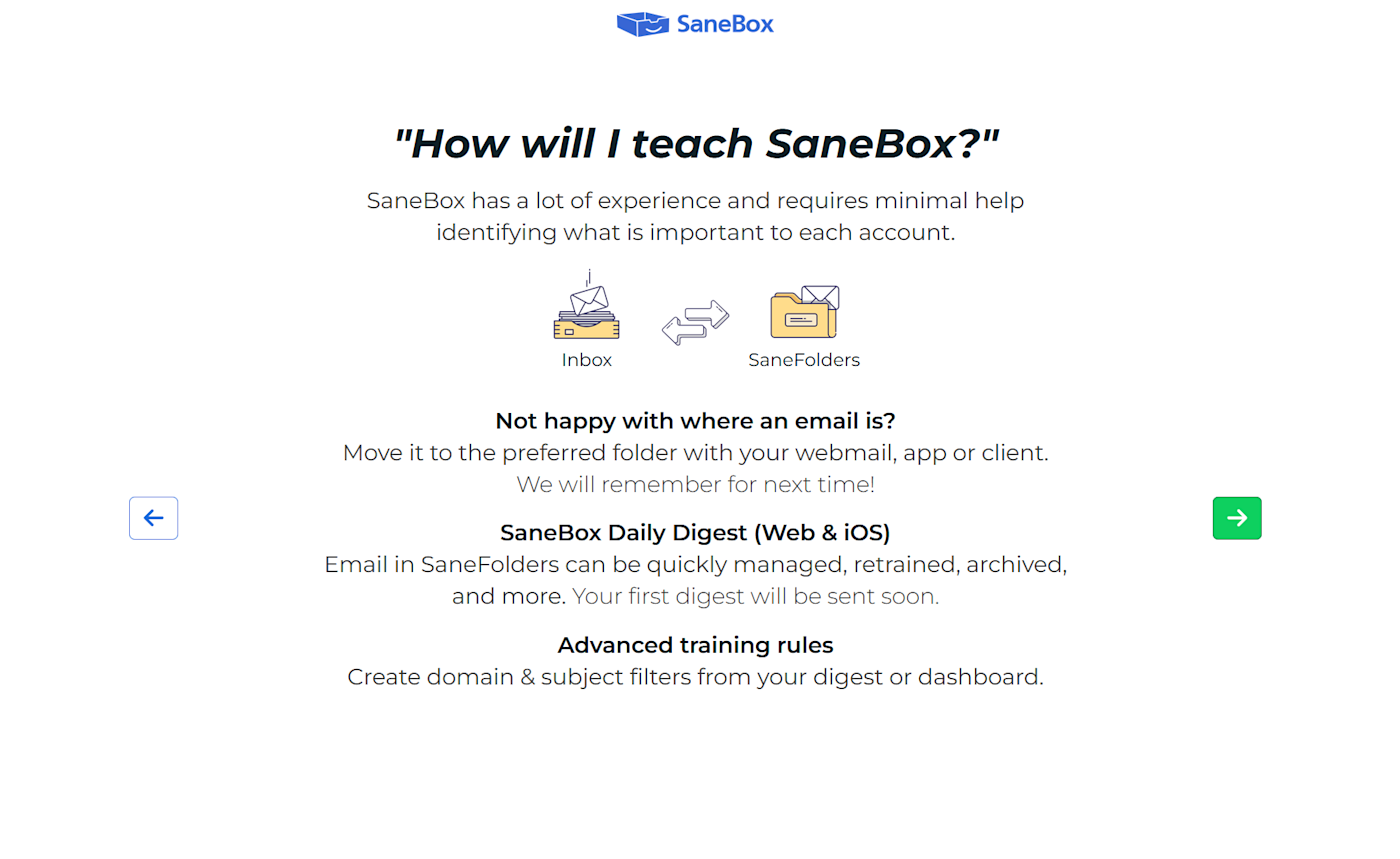
SaneBox, and AI app for email management

SaneBox starts by scanning your inbox, understanding who you usually communicate with, which newsletters you receive, and what useless emails arrive every day. Based on that, it can help you delete unwanted emails, prioritize important messages, and add tags to keep things organized.

Mailbutler
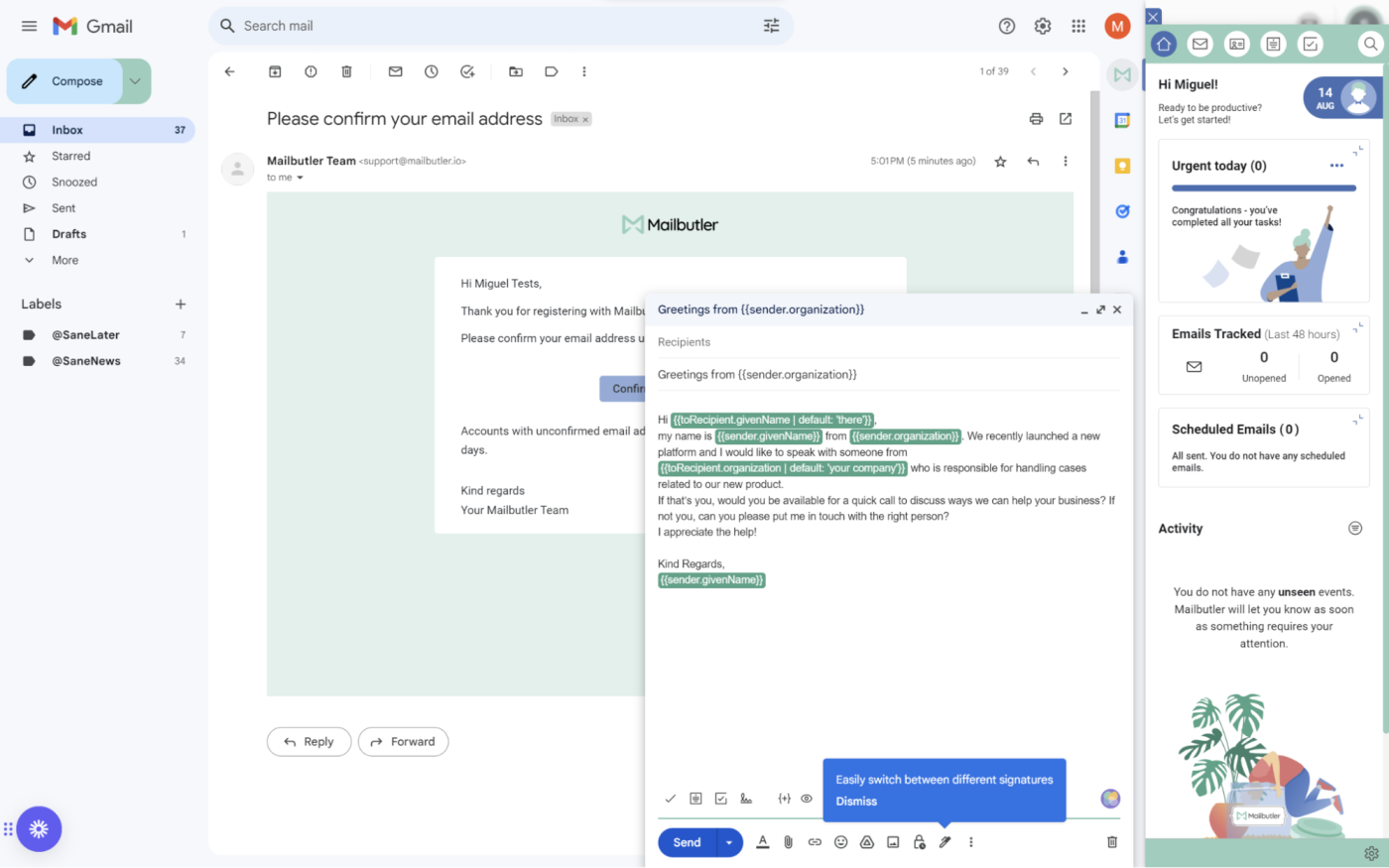
Mailbutler, our pick for the best AI email assistant for gathering contact details and tasks

Mailbutler has the full suite of generative AI tools in the email compose window: Smart Compose, Respond, Summarize, and Improve. An extension for Gmail, Apple Mail, and Outlook, it extracts the contact information of people in your inbox, so you don't have to organize them manually. And, if you usually forget to note down your tasks, it analyzes all the emails you get and extracts any detected tasks into the sidebar.

EmailTree
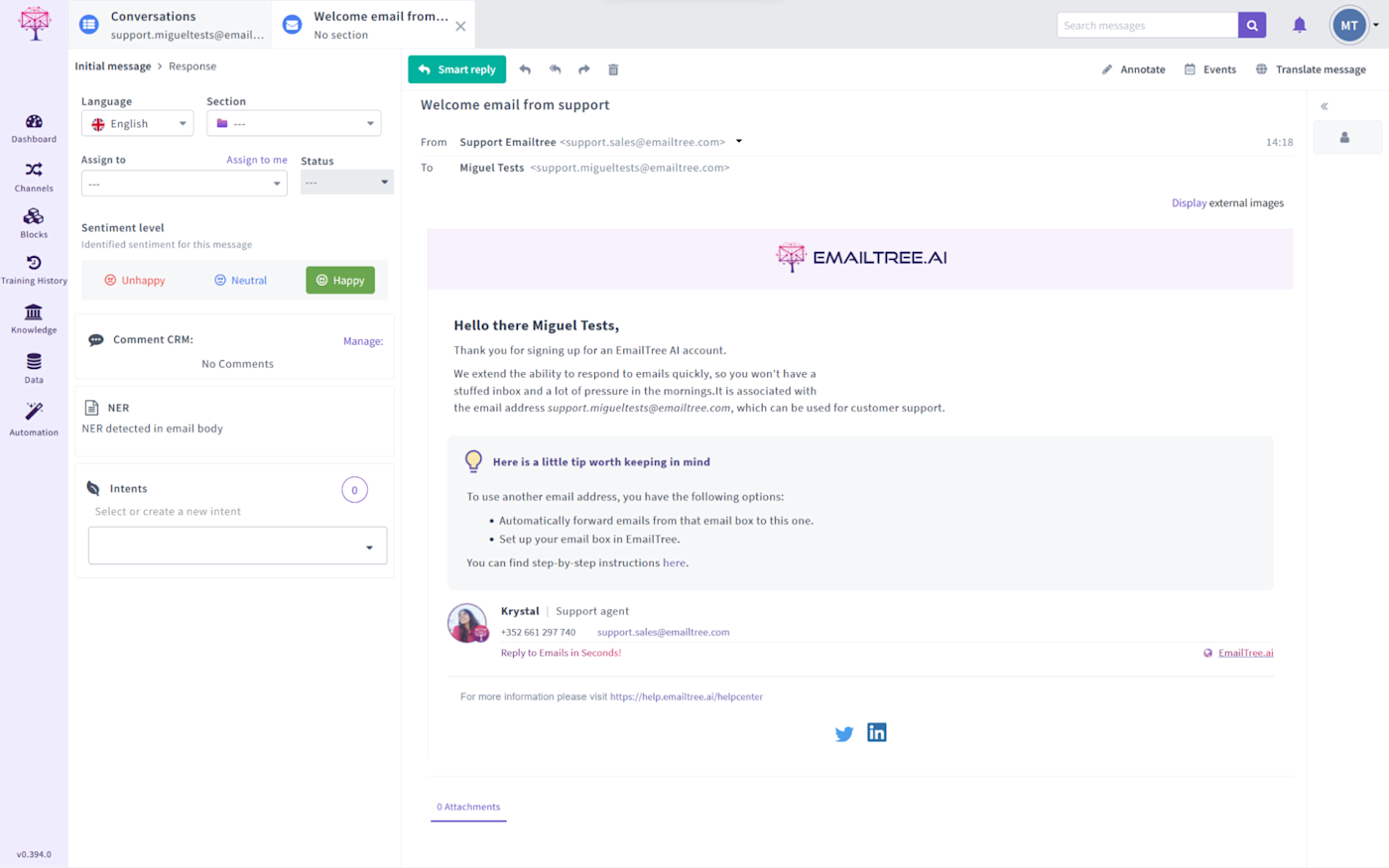
Emailtree, an AI app for email management

EmailTree is a solution for customer support teams, helping you organize your inbox, follow up on messages, and automate a few replies. It does this by processing the emails you receive and suggesting the follow-up action that makes the most sense. It's then up to you to trigger it.

12. AI apps for presentations and slide decks

Your magnetic stage presence is what people came for, but they stayed because of your beautiful slide deck. Clean and beautiful slides support your performance, keep your audience engaged, and help you drive in the points that you're making. The problem? Creating a solid slide deck can take a decent chunk of time, especially if you're starting from scratch. Can AI help?

Decktopus
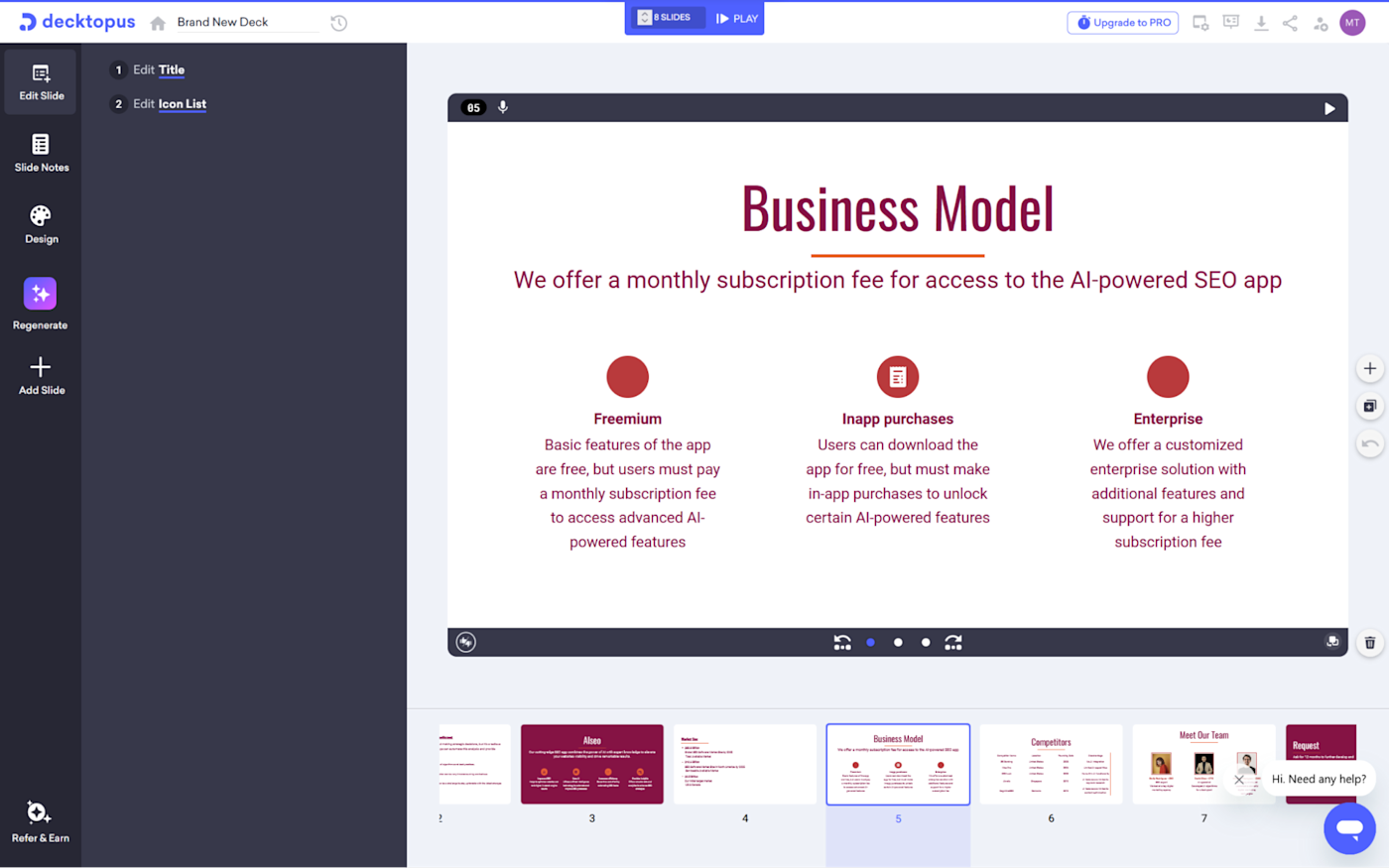
Decktopus, an AI presentation tool

Decktopus is simple and fun to use. You enter what your presentation should be about, the target audience, and the objective. It'll put together a full presentation with text and slides, with plenty of magic buttons scattered around the user interface, helping you change images or generate text. Great for starting with a solid first draft and honing it into a powerful final version.

Beautiful.ai
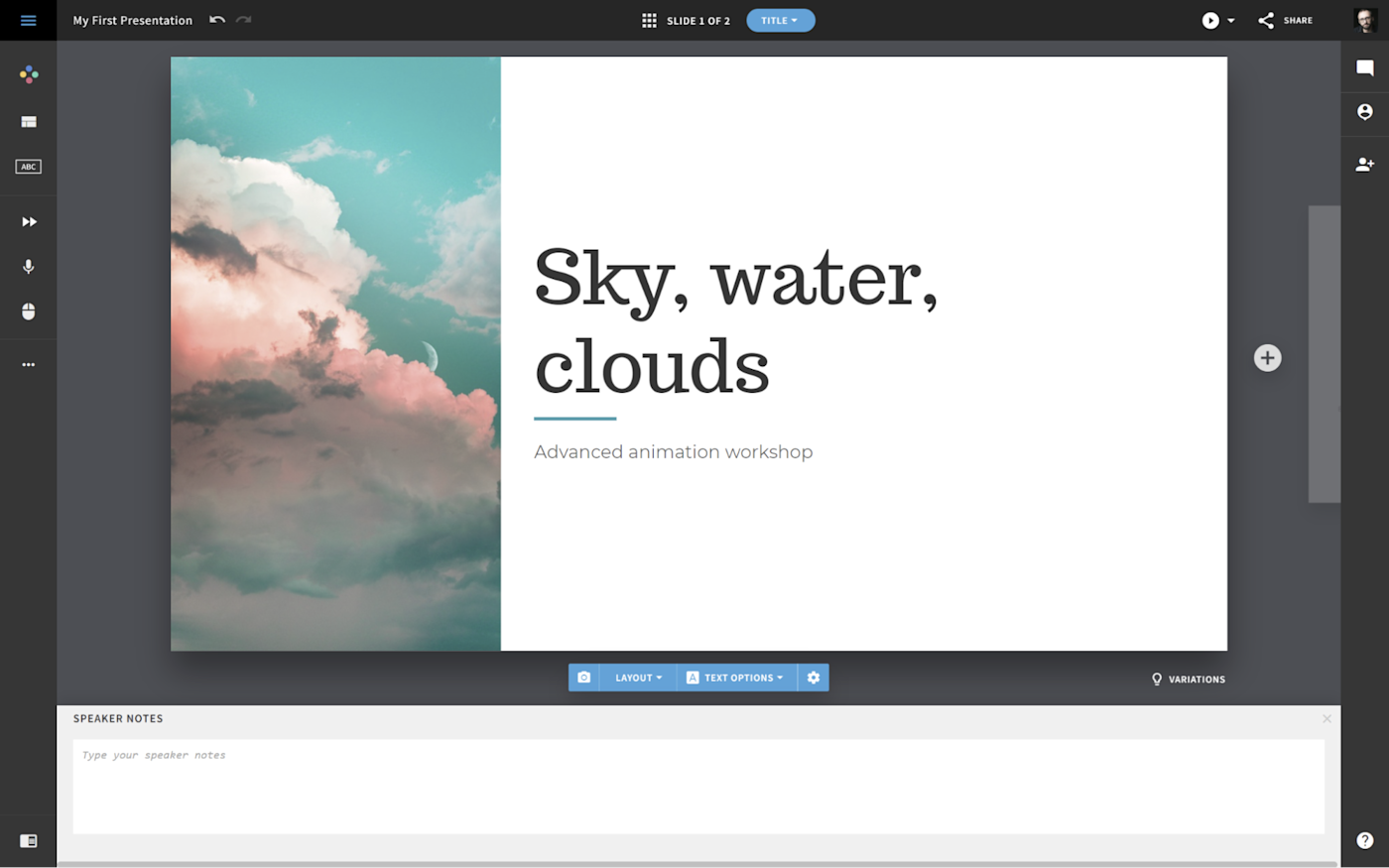
Beautiful.ai, an AI productivity app for building presentations

Beautiful.ai delivers on its name's promise. It simplifies the process of putting together a beautiful slide deck, with all the layouts and styles figured out. Pick the colors, find royalty-free images in the library, and start putting together your presentation. If you have data that changes frequently, you can update it by using sliders and tables. The values will then change dynamically on the presentation.

Slidesgo
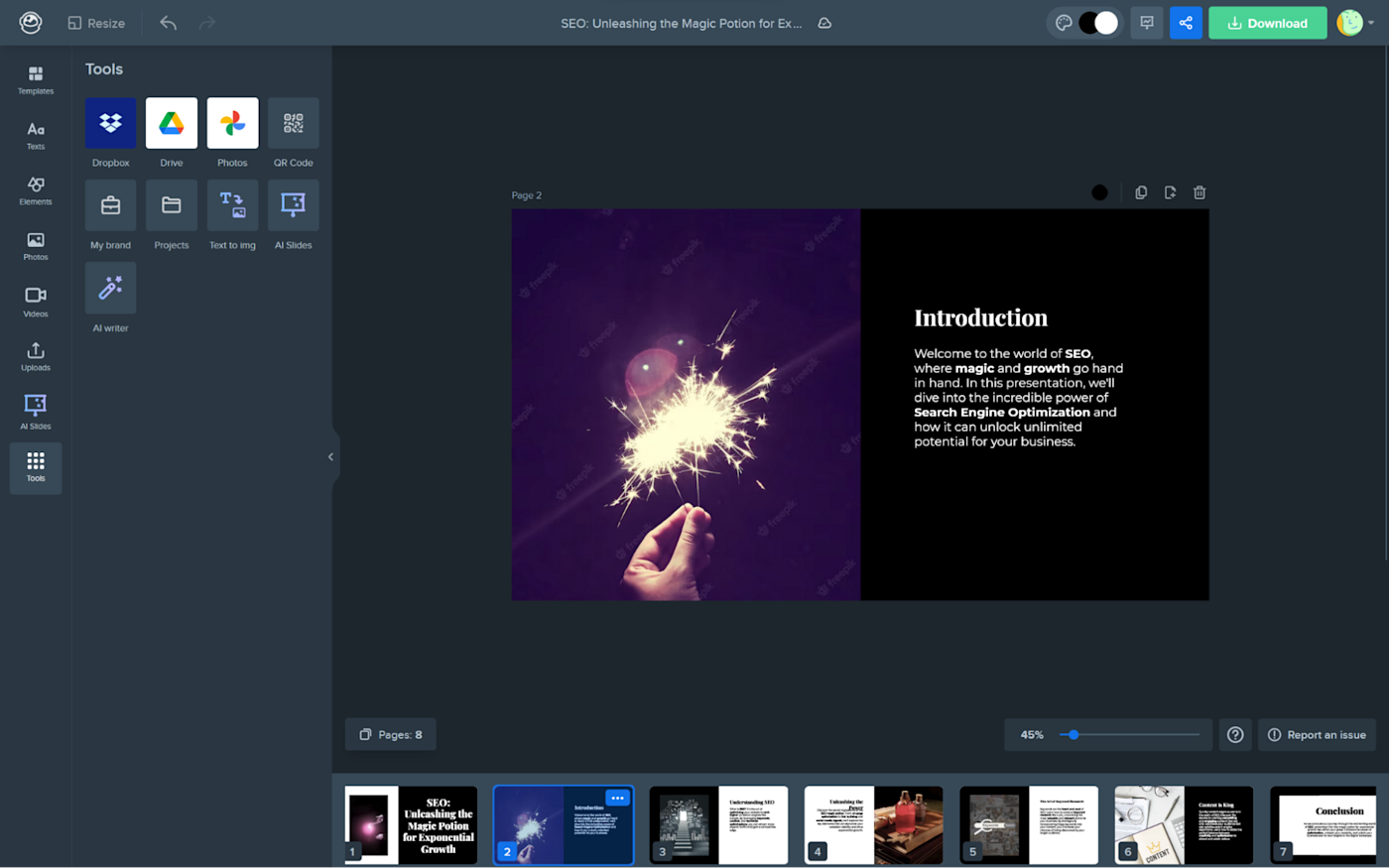
Slidesgo, an AI presentation app

Slidesgo will let you pick the topic, writing tone, and a general template. AI generates the whole presentation for you, and from there, you can add your own content, customize each slide, and use AI to write, generate images, or generate a new slide.

13. AI apps for automation

Each of these AI productivity tools is impressive on its own, but when you want to integrate AI into your daily workflows, that means connecting AI to the other tools you already use.

Zapier
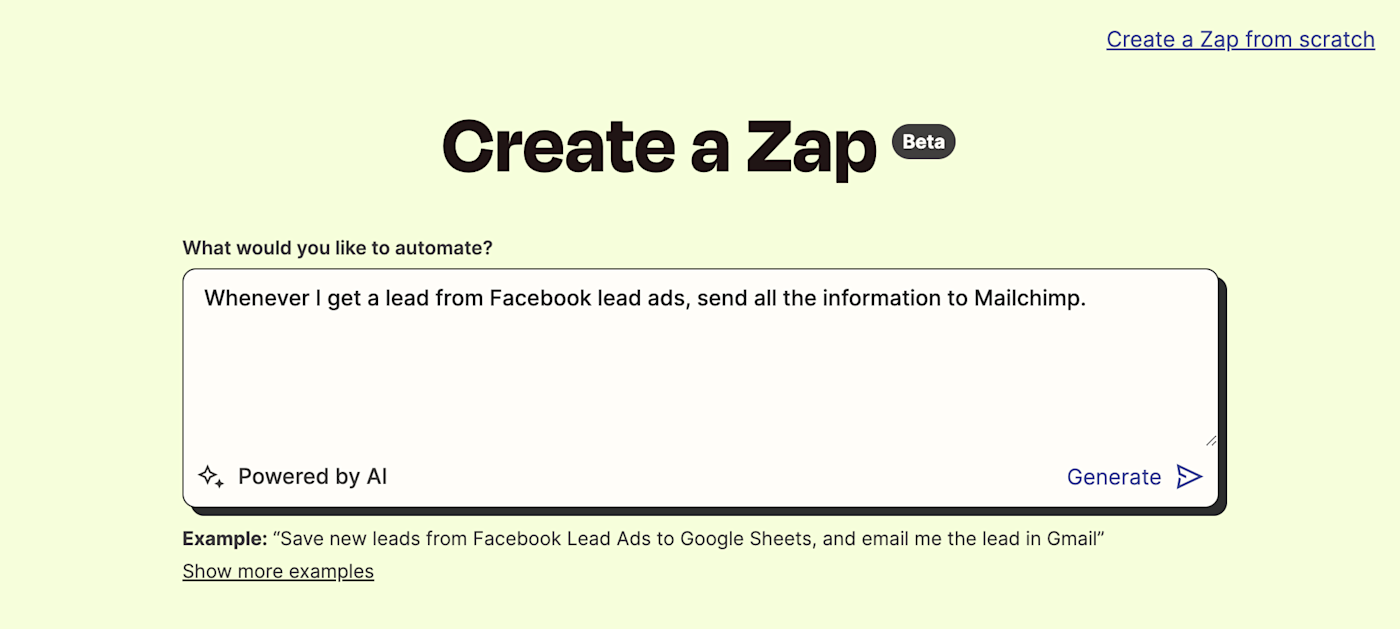
Zapier, an AI app for automation

Zapier lets you automate faster by using natural language to create workflows that connect thousands of apps. Describe what you want to automate, and Zapier will draft a workflow that you can easily customize. You can even use Zapier to build your own custom chatbot.

Zapier connects to OpenAIChatGPTJasperHugging Face, and thousands of other apps, so you can combine the magic of AI with the power of automation to accelerate the work that matters most.

Learn more about Zapier's AI tools, or read about how to create your own AI digital assistant using Zapier and AI.

Other AI productivity apps

If you like trying out more niche apps, here are some extra ones to keep an eye out for.

AI for productivity: the AI-powered you

I'm a full-blown AI enthusiast. Even still, I like to think that these are merely tools. They save you time, spark ideas, and offer new angles. Remember to always use your judgment and keep your attention on the objective of what you're working on. 

Another big risk: losing too much time feeding prompts to the AI, or generating so much output that it becomes difficult to edit, manipulate, and put together. Sharpen your cutting and editing skills to curb the excess, and you'll do great.

Monday, July 15, 2024

Google Gemini now allows users to double-check AI-generated information using Google search

 Statements are colour-coded for clarity, indicating similarity to existing content (green), lack of relevant content (orange), or insufficient information for evaluation (unhighlighted).

Google’s Gemini AI users can now verify the authenticity of the content generated by the chatbot using Google. When Gemini AI offers a response to a query, users can cross-check the information provided in the AI-generated content using the Google search engine.

Gemini has added a Google toggle right below the AI-generated content labelled “double-check response,” which can quickly cross-verify the authenticity of the content generated by Gemini AI. This feature can be accessed on both the mobile app and the web version of Gemini AI.

The new feature is available on both app and web version of Gemini. 

Google says, “The double-check responses feature helps you assess the credibility of Gemini’s statements using Google Search to find content that’s likely similar or different.”

For easier understanding, the cross-verification classifies statements into three different colours. Text highlighted in green suggests that Google search has found content similar to the AI-generated information and includes a link to it.

Similarly, if the text is indicated in orange, it means that Google did not find relevant content. Lastly, if part of the text is not highlighted, it indicates there isn’t much information on the web similar to the AI-generated content to evaluate it.

Depending on the response generated by Gemini AI, it could contain information similar to the generated response, and part of the response might not be relevant, with no such information accessible on the web by Google.

Large language models like Gemini AI are known to have issues such as generating inaccurate information, which can affect the credibility of their output. Google has integrated a double-checking feature using its search engine with the Gemini chatbot, making it easier for users to verify the accuracy of the AI-generated content.


Google Gemini | Google Gemini image generatorSince the launch of OpenAI's ChatGPT in November 2022, Google has been racing to produce AI software to rival that of the Microsoft-backed company.

World’s first hydrogen-powered commercial ferry launches in San Francisco

Unlike current diesel-powered ferries that emit pollutants, the hydrogen-powered Sea Change produces only heat and water vapor as byproducts. 

The world’s first commercial passenger ferry powered by 100% hydrogen fuel, the MV Sea Change, was launched on Friday at the San Francisco Ferry Building. The 70-foot catamaran can transport up to 75 passengers along the waterfront between Pier 41 and the downtown San Francisco ferry terminal starting July 19.

Unlike current diesel-powered ferries that emit pollutants, the hydrogen-powered Sea Change produces only heat and water vapor as byproducts. Passengers can even drink the emissions from an onboard water fountain. The service will be free for six months as part of a pilot program.

“The implications for this are huge because this isn’t its last stop,” said Jim Wunderman, chair of the San Francisco Bay Area Water Emergency Transportation Authority. “If we can operate this successfully, there are going to be more of these vessels in our fleet and in other folks’ fleets in the United States and we think in the world.”

The Sea Change can travel about 300 nautical miles and operate for 16 hours before needing to refuel. The hydrogen fuel cells produce electricity by combining oxygen and hydrogen in an electrochemical reaction.

The project was financed and managed by SWITCH Maritime, with the vessel constructed at Bay Ship and Yacht in Alameda, California, and All-American Marine in Bellingham, Washington. Officials hope the technology can help clean up the shipping industry, which produces nearly 3% of the world’s total greenhouse gas emissions.

“The real value of this is when you multiply out by the number of ferries operating around the world,” said Frank Wolak, president and CEO of the Fuel Cell and Hydrogen Energy Association. “There’s great potential here. This is how you can start chipping away at the carbon intensity of your ports.”

Sennheiser’s earphones specially crafted for the gym will up your treadmill game

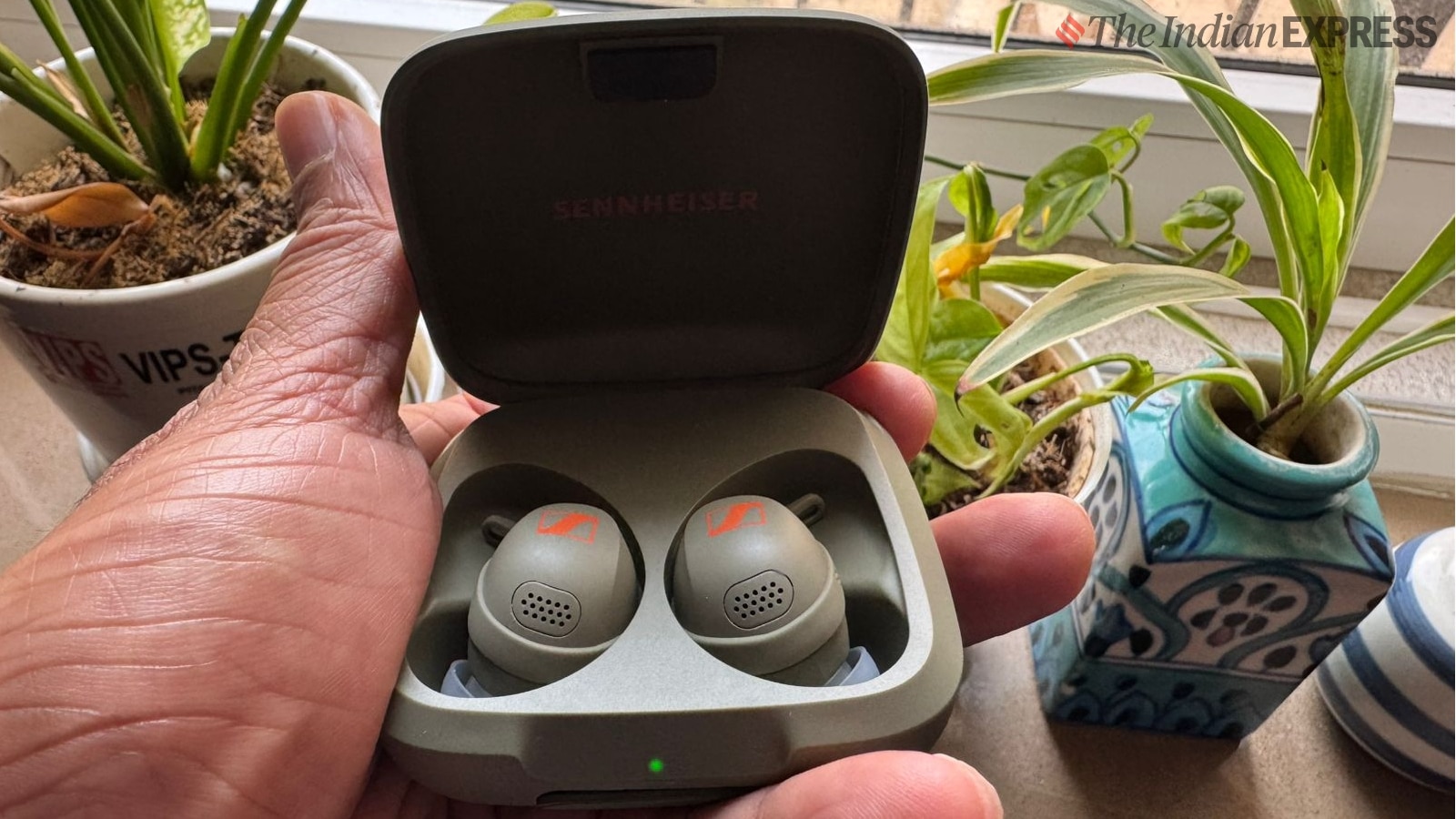
 The Sennheiser Momentum Sport is a unique truly wireless earphone designed for the gym-goers who prioritise fitness tracking and situational awareness alongside great sound.

Are there a pair of perfect wireless earphones for the gym? Well, Sennheiser seems to think so and its Sennheiser Momentum Sport wants to stand out in the gym by offering more than audio awesomeness.

The Sennheiser Momentum Sport is a different truly wireless earphone, in many ways than one. To start with, the design is unique, both for the earpieces as well as the charging case. The charging case is larger than usual and has a rubber finish which suggests clearly that it wants to be used in sweaty conditions or near the pool. Also, the charging port at the back is also protected by a rubber flap. The olive green colours of the review unit is something unique and will stand out for sure.

Sennheiser Momentum SportMomentum Sport comes in a large rubber charging/carry case. 

The earpieces are different in their shape and size. It is not exactly larger than the largest ones I have used, but its teardrop-like shape makes it feel so for sure. Because of this, it also comes with fins that need to be looped in to keep the earpieces in place when you are on the treadmill or like me treading the local roads in the humid Delhi climate. You will have to spend a few minutes getting the fit of the fin perfect as it needs to be aligned with some dots on the earpieces.

Towards the inside of the earpiece, there are a host of sensors and they do more than you ever imagined. For instance, this is the first earphone I have used that works with taps near it and not exactly on it. You can pause/play or skip songs by tapping on your face, near the earpiece. Very interesting. The sensors also capture your heart rate and body temperature which you can monitor on the app — not a new feature on an earphone, but still a very useful one given it’s not very commonplace. The heart rate was exactly the same as what my Apple Watch was showing and this means you can use this as a source for fitness apps like Polar which the Sennheiser app connects to.

I am not sure I like this design as I could feel the earphones on my ears all the time. The ones that I love are those I can forget about after a few minutes and sort of become a part of your ears. These seem a few grams heavier than my ears are used to. You will need to ensure you try the fit test and get the silicone tip that keeps the earpiece in place and noise out.

I have said this before, you really don’t need to talk about the audio quality of a Sennheiser and the same holds true for the Momentum Sport as well. A few seconds into Amber Rubarth’s Strive and I knew this one had crossed the threshold of audio quality without any issue. Holly Cole’s Train Song might not be the one you will play at the gym to get pumped up, but then this one is great to sweat out any earphone worth its salt. And the Momentum Sport came out in flying colours as I could hear the small “trings and twings” in the background well, along with their movements.

As I listened to Raayan Rumble by A R Rahman, I could not help but notice that the volume was a bit low for my liking even at the highest levels and with a bass boost. This is one song you would like to hear at high volume to feel the impact, especially in a gym. But the open design means you have to be aware of the surroundings and the volume levels will be a bit lower than the regular Sennheiser Momentum for instance. I am just worried that there will be some Punjabi gym music that will seep in despite spending top dollar on this earphone.

Sennheiser Momentum SportThe buds themselves are slightly bulky and heavier, as they pack additional sensors.

The Momentum Sport comes with adaptive noise cancellation and you feel this when out in the open as it automatically goes into a mode where you are aware of your surroundings. But then India is a noisy place and you want to cut out the noise at times and that is where you can use the app to switch back to full noise cancellation. The call quality is very good and does not have the tinny feel some Sennheiser earphones used to have earlier.

At Rs 27,990, the Sennheiser Momentum Sport makes great sense for those who spend a lot of time in the gym every day. Remember, this is not the earphone you would buy to lounge at home with your acoustic playlist but will take you to your gym to capture your heart rate and body temperature as you listen to your high-tempo playlist but without losing the sense of where you are. The Sennheiser Momentum Sport is a new take on the earphone, one that has been created for a special use case. This is going to add to your gym game for sure.

AI and Cybercrime Trends

 Explore the issues surrounding cybercrime. Learn about legal frameworks, and how cybercrime is being addressed around the world

Cybercrime

AI and cybercrime

The AI race between cybercriminals and those who try to protect systems is emerging as one of the most critical for the stability and safety of the digital world. Let’s see how AI is being used:

AI as a tool to commit cybercrime

Automated hacking uses AI to find new vulnerabilities more rapidly than human hackers. Phishing attacks are about using AI to generate fake emails and find targets for phishing. AI is used to prepare patterns for brute-force password cracking. AI facilitated a new generation of deepfakes that can produce realistic audio and video, which could be used for fraud, disinformation campaigns, and blackmail. In particular, deepfakes can be used for impersonation attacks. As data feeds into AI, data poisoning can mislead AI for cybercrime purposes. AI-powered bots can be used for Distributed Denial of Service (DDoS) attacks or for spreading misinformation on social media platforms.

AI as a tool to prevent cybercrime

AI empowers anomaly detection by identifying normal behaviour patterns within computer networks and deviations that could indicate a cyberattack. Predictive analytics can analyse historical data and identify patterns often leading to cyber-attacks. AI improves malware and phishing detection by identifying phishing emails or malicious links. Once a cyberattack happens, AI can automate incident response by automatically isolating affected systems, closing specific network paths, or even implementing patches to software vulnerabilities.


The techniques used to facilitate the types of cybercrime that affect the confidentiality, integrity and availability of data and systems are very diverse and more and more sophisticated. Some of the most widespread techniques include:

Malicious software: This includes viruses, spyware, and other unwanted software that is installed on computers and other devices without permission and performs unwanted tasks, often for the benefit of the attacker. These programs can damage devices, and can be used to steal personal information, monitor and control online activity, send spam and commit fraud, as well as infect other machines on the network. They also can make devices vulnerable to viruses and deliver unwanted or inappropriate online advertisements.

Viruses, trojan horses, adware, and spyware are all types of malware. A virus can replicate itself and spread to other devices, without the user being aware. Although some viruses are latent, most of them are intended to interfere with data or affect the performance of devices (reformatting the hard disk, using up computer memory, etc). A trojan horse is a type of malware that is often disguised as legitimate software. Trojans can be employed by cyber-thieves and hackers trying to gain access to users’ systems. Users are typically tricked by some form of social engineering into loading and executing Trojans on their systems. Once activated, Trojans can enable cyber-criminals to spy on users, steal sensitive data, and gain backdoor access to users’ system. Adware collects marketing data and other information without the user’s knowledge, or redirects search requests to certain advertising websites.

Spyware monitors users, gathers information about them and transmits it to interested parties, without the users being aware. Types of information gathered can include: the websites visited, browser and system information, the computer IP address, as well as more sensitive information such as e-mail addresses, and passwords. Additionally, malware can cause browser hijacking, in which the user’s browser settings are modified without permission. The software may create desktop shortcuts, display advertising pop-ups, as well as replace existing home pages or search pages with other pages.

Botnets: Botnets are networks of hijacked personal computers that perform remotely commanded tasks without the knowledge of their owners. A computer is turned into a bot after being infected with specific type of malware which allows remote control. Botnets are used for a wide variety of crimes and attacks: distributing spam, extending malware infections to more computers, contributing to pay-per-click fraud, or identity theft. One of the most worrying uses of botnets is to perform distributed denial of service (DDoS) attacks.

Researchers and cybersecurity companies have warned that botnets are becoming the biggest Internet security threat, as they are increasing the effects of viruses and other malicious programs, raising information theft, and boosting denial of service attacks.  As an illustration of the dimension of this threat, the Simda botnet, taken down in April 2015, affected computers in 190 countries and involved the use of 14 command-and-control servers in five countries.

Denial of service (DoS) attacks: These attacks involve flooding a computer or website with information, preventing them to function properly. These attacks are aimed to exhaust the resources available to a network, application or service, in order to prevent users from accessing them. They are more frequently aimed at businesses, rather than individuals. Distributed denial-of-service (DDoS) attacks are those attacks in which multiple compromised computers attack a single target. A DoS attack does not usually result in the theft of information or other security loss, but it can cause financial or time loss to the affected organisation or individual, because of its effects (particular network services becoming unavailable, websites ceasing operation, targeted email accounts prevented from receiving legitimate emails, etc.)

Since cybercrime transcends borders, any legal framework needs to be common among countries and this requires improved international cooperation. This international cooperation may be bilateral, regional, continental, or universal. Most bilateral agreements on law enforcement come by way of Mutual Legal Assistance Treaties (MLATs).

This provides an effective tool for cross-border investigations and prosecution. At regional level, various regional blocks have developed frameworks for their regions in cybercrime legislation. The Organization of American States (OAS) created a framework of guidelines to manage cybercrime as early as 1999. In 2009 the Economic Community of West African States (ECOWAS) adopted a directive on fighting cybercrime, and in 2011 the Common Market for Eastern and Southern Africa (COMESA) presented the Cybersecurity Draft Model Bill. In June 2014, the African Union adopted the Convention on Cybersecurity and Personal Data Protection. Several international frameworks have already been created to fight cybercrime, the most prominent of which is the Council of Europe’s Convention on Cybercrime, which contains provisions on types of offences, procedural Laws and international cooperation among countries.

The application of technical solutions to combat cybercrime has always been the preferred option for most cybersecurity experts. However, most law enforcement personnel are not equipped with the requisite technological knowledge while most cybercriminals are experts in computer technology.

Various organisations, such as the United States Department of Justice (DOJ) and the International Telecommunication Union (ITU), have initiated capacity building programmes for developing countries in Africa, the Caribbean, and Pacific as well as other countries in legislative drafting and prosecution of cybercrime. As measures to combat cybercrime continue to multiply, various organisations have established their individual structures for cybersecurity.

It is not uncommon for private organisations to have their own in-house rules on the acceptable use of their networks and also to educate their clients or staff on the issues of cybercrime. Some groups of organisations have also set up Computer Emergency Response Teams (CERTs) to assist in the technical handling of cybercrime, especially those targeted at computer networks. Several multinational organisations have also contributed to the fight against cybercrime.

These organisations have a unique role as some of them control the infrastructure on which the Internet runs, and include the US National Cyber Security Alliance and INTERPOL. Other regional legal instruments include: the League of Arab States Convention on Combating IT Offences (2010), the Shanghai Cooperation Organisation Agreement on Cooperation in the Field of International Information Security, and the African Union Convention on the Confidence and Security in Cyberspace (2014).

On the global level, the United Nations Office on Drugs and Crime (UNODC) is the leading organisation, with a set of international instruments to fight cybercrime. Since cybercrime often involves an organised approach, the UNODC’s Convention against Transnational Organised Crime could be used in the fight against cybercrime. Additionally, Interpol facilitates a global network of 190 national police organisations, which plays a key role in the cross-border investigation of cybercrime. The ITU hosts the World Summit on the Information Society (WSIS) implementation process in cybersecurity, labelled the ITU Global Security Agenda.

best practices for using ChatGPT effectively

  ChatGPT is a powerful tool for enhancing communication, automating tasks, and improving decision-making processes. However, using it effec...

leadsleap

bmfads_native_300x250

multiwall_480x270

hilltop_multitagban

multiwall_426x240

bmfads_interstitial_400x400

ads-bitcoin_300x250